
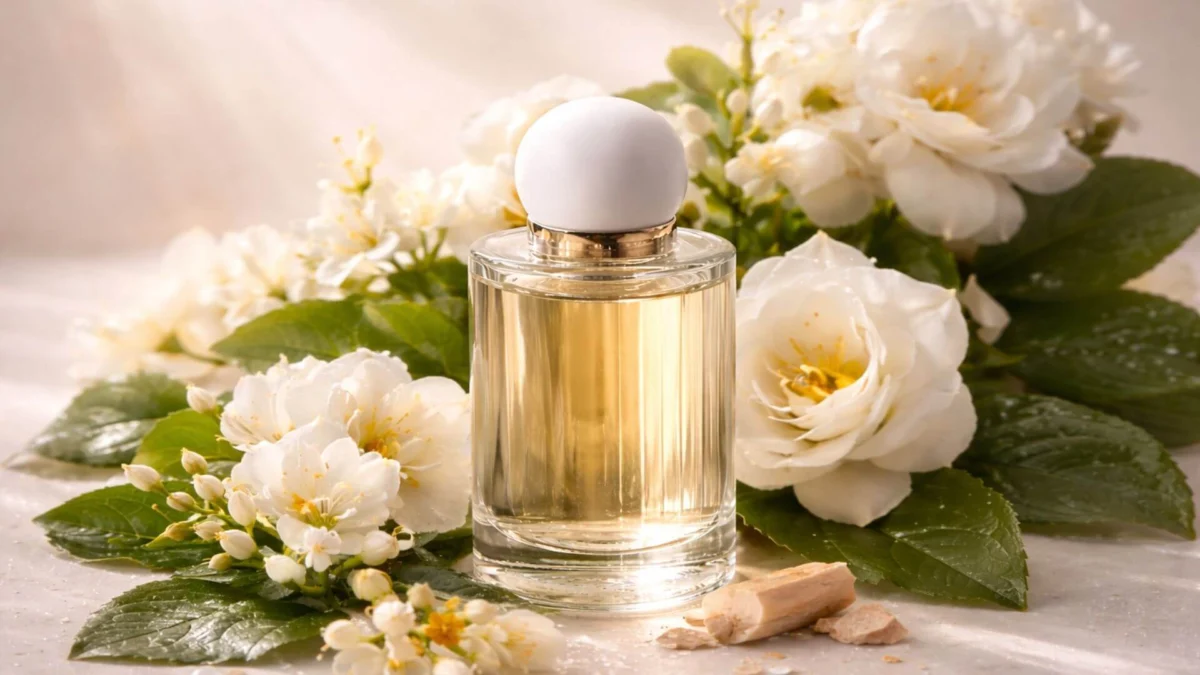
The global fragrance industry, currently valued at over $50 billion, is frequently driven by the "newness" cycle, with luxury houses and niche laboratories releasing hundreds of scents annually to capture shifting consumer preferences. However, a significant counter-trend has emerged in recent years: the resurgence of legacy "drugstore" classics that offer reliability, nostalgia, and a specific olfactory profile that modern compositions often struggle to replicate. At the forefront of this movement is Jovan Island Gardenia, a fragrance launched in 1982 that has not only survived the volatile trends of four decades but has flourished in the digital age. With a consistent presence on global e-commerce platforms like Amazon, where it maintains a 4.4 out of 5-star rating based on more than 5,500 verified reviews, the scent serves as a case study in the longevity of the "clean floral" aesthetic.
The Olfactory Architecture of a 1982 Classic
To understand why a fragrance created in the early 1980s continues to resonate with contemporary audiences, one must examine its technical composition. Jovan Island Gardenia is categorized as a soliflore-leaning floral, though its complexity is bolstered by a strategic three-tier olfactory pyramid. The fragrance opens with radiant neroli, a classic citrus-floral note derived from the blossoms of the bitter orange tree. Neroli is prized in perfumery for its dual nature; it provides an immediate sense of freshness and "cleanliness" while maintaining a sophisticated floral backbone.
As the top notes dissipate, the heart of the fragrance reveals its namesake: the gardenia. In the world of perfumery, gardenia is a notoriously difficult note to capture. Unlike rose or jasmine, gardenia flowers do not yield a high enough oil content through traditional distillation or enfleurage to be commercially viable. Consequently, the gardenia note in Jovan Island Gardenia is a masterful reconstruction, utilizing a blend of synthetic and natural molecules to mimic the flower’s signature creamy, slightly "lactonic" (milky) scent. This lactonic quality gives the perfume a texture that reviewers often describe as "velvety" or "petal-like," avoiding the sharp, synthetic screech often found in lower-priced floral compositions.

The base of the fragrance is anchored by warm sandalwood. This choice of fixative is critical for the scent’s longevity. Sandalwood provides a smooth, woody foundation that complements the creaminess of the gardenia without overpowering it. The result is a fragrance that balances the brightness of a spring morning with the warmth of sun-warmed skin, a combination that has proven to be timeless.
A Chronological Context: From the 1980s Powerhouse Era to Modern Minimalism
The launch of Jovan Island Gardenia in 1982 occurred during a transformative period for the fragrance industry. The early 1980s were largely defined by "powerhouse" fragrances—heavy, spicy, and resinous scents like Yves Saint Laurent’s Opium or Dior’s Poison, which were designed to leave significant "sillage" (the trail left by a perfume). In this landscape, Jovan Island Gardenia represented a pivot toward accessible elegance.
Jovan, a brand founded in 1968, had already established itself as a disruptor in the market with the release of Jovan Musk in 1972. The brand’s philosophy centered on the democratization of scent, offering high-quality, evocative fragrances at a price point accessible to the general public. By the time Island Gardenia was released in 1982, the brand was leaning into the "clean and natural" trend that would eventually pave the way for the minimalist fragrances of the 1990s.
Throughout the 1990s and 2000s, as the industry moved toward ozonic and gourmand (food-like) scents, Island Gardenia maintained a quiet but steady following. Its survival can be attributed to its refusal to follow fleeting trends. While other 80s icons were reformulated beyond recognition or discontinued, Jovan kept the core of Island Gardenia intact. The transition to the digital marketplace in the 2010s provided the final catalyst for its current resurgence. The ability for consumers to share their "holy grail" budget finds on social media platforms like TikTok and Instagram has introduced a new generation of Gen Z and Millennial consumers to a scent that their mothers or grandmothers may have worn.

Market Data and the Power of Consumer Sentiment
The success of Jovan Island Gardenia is not merely anecdotal; it is supported by robust consumer data. On Amazon, the fragrance occupies a top position in the "Women’s Cologne" category. An analysis of the 5,500+ reviews reveals several recurring themes that explain its market dominance. Approximately 70% of positive reviews highlight the fragrance’s "clean" profile, a term that has become a major marketing buzzword in the 2020s "Clean Girl" aesthetic.
Furthermore, the price-to-value ratio is a significant driver of its popularity. Retailing for approximately €33.54 (roughly $35), it occupies a middle ground between ultra-cheap body sprays and expensive designer eaux de parfum. Market analysts suggest that in times of economic uncertainty, consumers often retreat to "affordable luxuries"—products that provide a high level of sensory satisfaction without a high financial risk.
Consumer testimonials often verge on the poetic, reflecting a deep emotional connection to the scent. Phrases such as "windows open on a spring day" or "a soft whisper of spring" indicate that the fragrance functions as more than just a grooming product; it serves as a mood enhancer. This emotional resonance is a key factor in brand loyalty, ensuring that consumers return to the product for decades.
Comparative Analysis: Heritage Classics vs. Contemporary Alternatives
While Jovan Island Gardenia remains a benchmark for affordable gardenia scents, it exists within a broader ecosystem of floral fragrances. To understand its standing, one must compare it to modern interpretations of the same floral notes.

A prominent contemporary rival is Floral by Coach. While both fragrances feature gardenia as a central note, their executions reflect their respective eras and price points. Coach Floral, retailing at approximately €102, incorporates modern elements such as pink pepper and pineapple in the top notes, creating a "sparkling" and "vibrant" energy that is characteristic of 21st-century perfumery. It also utilizes jasmine sambac and patchouli to add a layer of earthy complexity.
The difference lies in the intent. Coach Floral is designed to be a multi-faceted fashion accessory, changing and evolving significantly on the skin over several hours. In contrast, Jovan Island Gardenia is more linear; what you smell in the first five minutes is largely what remains for the duration of the wear. For many consumers, this linearity is a benefit, providing a consistent "freshly showered" scent that does not become cloying or overly complex in high heat.
The Chemistry of Gardenia: A Technical Challenge
The fascination with gardenia in perfumery is rooted in the flower’s chemical complexity. The scent of a living gardenia changes as the flower matures. A young bud smells green and mushroom-like, while a fully opened bloom develops a sweet, indolic, and creamy profile. Because the scent cannot be extracted naturally, perfumers must use "headspace technology"—a method of "capturing" the air around a living flower—to analyze the molecules and then recreate them in a lab.
Key molecules often used in these reconstructions include styrallyl acetate (for a green, gardenia-leaf effect) and various lactones (for the creamy, skin-like quality). Jovan’s ability to balance these synthetics in 1982 to create a scent that still feels "natural" to the modern nose is a testament to the skill of the original, often uncredited, perfumers behind the brand. This technical achievement is what allows the fragrance to compete with much more expensive niche offerings that also focus on white floral realism.

Broader Implications for the Beauty Industry
The enduring success of Jovan Island Gardenia offers several insights for the future of the beauty and fragrance industry. First, it highlights the "anti-trend" movement. As consumers become overwhelmed by the sheer volume of new releases, there is a growing appreciation for products that offer a "signature" experience—a reliable, singular scent that defines a person’s presence.
Second, it underscores the importance of accessibility. While the "prestige" fragrance market continues to grow, there is a massive, underserved market for high-quality, mid-range scents that offer professional-grade olfactory experiences. Jovan has occupied this space for over half a century by focusing on the juice rather than elaborate packaging or celebrity endorsements.
Finally, the phenomenon of Island Gardenia demonstrates the power of the "Clean" olfactory category. In a post-pandemic world, scents that evoke cleanliness, soap, and fresh air have seen a surge in sales. Fragrances that provide a sense of order and purity offer a psychological respite from a chaotic world.
As we move toward the mid-2020s, the "clean floral" genre is expected to continue its evolution, with an emphasis on sustainable ingredients and skin-safe synthetics. However, the blueprint established by Jovan in 1982—neroli for brightness, gardenia for creaminess, and sandalwood for warmth—remains the gold standard for the category. Whether purchased in a local drugstore or through a global digital retailer, Jovan Island Gardenia stands as a reminder that in the world of perfumery, true elegance is never outdated.

0 Comments