
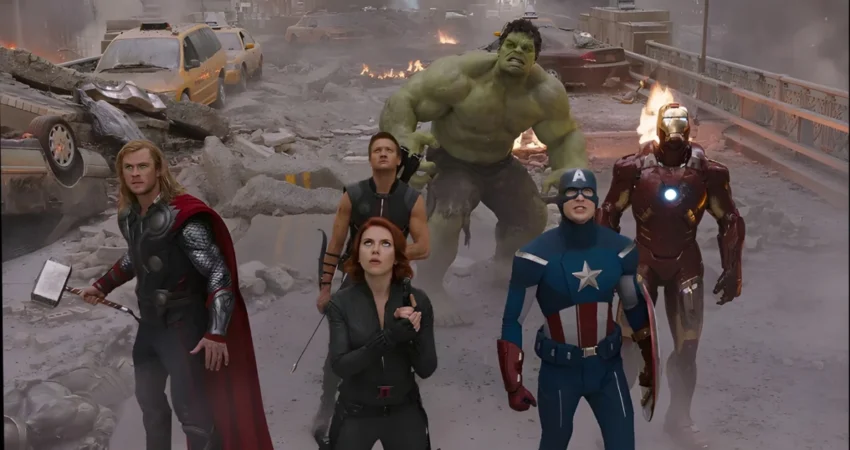
The announcement of the fifteen-week countdown to the theatrical debut of Avengers: Doomsday has prompted a significant retrospective analysis of the Marvel Cinematic Universe (MCU), specifically focusing on the 2012 film, The Avengers, which served as the foundational pillar for the modern superhero blockbuster. As Marvel Studios prepares to transition into a new era headlined by the return of Robert Downey Jr. in the role of Doctor Doom, the industry has turned its attention back fourteen years to the release that fundamentally altered the trajectory of global cinema. The Avengers (2012) was not merely a commercial success; it was a proof-of-concept for the "shared universe" model that has since dominated Hollywood production strategies for over a decade. By grossing over $1.5 billion at the global box office, it became the first MCU entry to surpass the billion-dollar milestone, effectively concluding Phase 1 of the franchise while establishing a narrative framework that would span dozens of subsequent films and television series.
The Strategic Foundation of Phase 1 and the 2012 Milestone
To understand the weight of the upcoming Avengers: Doomsday, one must examine the meticulous construction of the MCU’s Phase 1. Beginning in 2008 with Iron Man, Marvel Studios took an unprecedented risk by developing individual properties with the intent of eventually merging them into a single ensemble narrative. This strategy culminated in May 2012 with the release of The Avengers, directed by Joss Whedon. The film successfully integrated disparate characters—Tony Stark (Iron Man), Steve Rogers (Captain America), Bruce Banner (The Hulk), Thor, Natasha Romanoff (Black Widow), and Clint Barton (Hawkeye)—into a cohesive unit under the direction of S.H.I.E.L.D. Director Nick Fury.
The narrative centered on the recovery of the Tesseract, an artifact of immense cosmic power that had been introduced in Captain America: The First Avenger. The antagonist, Loki, portrayed by Tom Hiddleston, acted as a catalyst for the team’s formation, leading to the "Battle of New York." This sequence remains a benchmark for digital effects and ensemble choreography in the action genre. Beyond the immediate plot, the film’s mid-credits sequence introduced Thanos, the "Mad Titan," signaling to audiences that the individual stories they had watched were part of a much larger, decade-long "Infinity Saga."

Financial Performance and Critical Reception Data
The Avengers (2012) remains one of the most statistically significant films in cinematic history. Upon its release, it shattered multiple records, including the highest-grossing opening weekend in North America at the time, earning $207.4 million in its first three days. According to data from Box Office Mojo, the film eventually reached a worldwide total of $1,518,815,515, making it the highest-grossing film of 2012 and the third highest-grossing film of all time at that point in history.
The film’s success was not limited to financial metrics. On the review aggregator Rotten Tomatoes, the film maintains a 91% approval rating from both critics and general audiences. Critical consensus at the time highlighted the film’s ability to balance six major leads without sacrificing character development—a feat previously thought impossible by many industry analysts. The production carried a budget of approximately $220 million, a figure that was considered a massive gamble for a studio that had only recently been acquired by The Walt Disney Company. The return on investment solidified Marvel’s position as Disney’s primary engine for theatrical growth.
The Road to Avengers: Doomsday: A 15-Week Narrative Strategy
In anticipation of Avengers: Doomsday, Marvel Studios has released a curated "homework" list consisting of 15 essential productions that fans are encouraged to revisit to fully grasp the stakes of the new film. This list is being highlighted at a rate of one film per week leading up to the premiere. The Avengers (2012) holds the fourth position on this chronological and thematic roadmap.
The preceding films on the list—X-Men (2000), X-Men 2 (2003), and Captain America: The First Avenger (2011)—indicate that the narrative of Doomsday will likely draw from both the original MCU timeline and the legacy of the 20th Century Fox Marvel properties. This integration suggests a heavy focus on the "Multiverse" concept, which has been the central theme of the MCU’s Phase 4, 5, and 6. By placing the 2012 Avengers film early in the viewing schedule, Marvel reinforces the idea that the origins of the team and their first encounter with cosmic threats are vital precursors to the arrival of Doctor Doom.

The Impact of the "Shared Universe" Model on the Film Industry
The legacy of the 2012 film extends far beyond its own runtime. Its success forced a paradigm shift in how major studios approached intellectual property. Following The Avengers, several other studios attempted to launch their own shared universes, including the DC Extended Universe (DCEU), the Dark Universe (Universal Monsters), and the MonsterVerse (Godzilla/Kong). While results across these competitors have been varied, the "Marvel Formula"—characterized by interconnected post-credits scenes, recurring secondary characters, and cross-film references—became the standard for blockbuster filmmaking.
Industry analysts point out that The Avengers (2012) also redefined the "event film." Before 2012, sequels were the primary method of franchise extension. After 2012, the "crossover event" became the ultimate goal for theatrical distribution. This model allowed Marvel to sustain audience interest over long periods, as viewers felt compelled to see every installment to remain current with the overarching plot.
Narrative Continuity: From Loki to Doctor Doom
The transition from the villainy of Loki in 2012 to the impending threat of Doctor Doom in the upcoming Avengers: Doomsday represents a significant evolution in the MCU’s stakes. While Loki’s invasion of New York was a global threat, Doctor Doom, particularly with Robert Downey Jr. returning to the franchise in a new role, suggests a threat to the very fabric of reality.
The casting of Downey Jr. as Victor Von Doom is a meta-textual nod to the film that started it all. Having played the hero who sacrificed himself to save the universe in Avengers: Endgame, his return as a primary antagonist creates a psychological tension for the audience that mirrors the internal conflicts of the characters on screen. Analysts suggest that the "homework" list’s inclusion of The Avengers (2012) is intended to remind audiences of the "founding" era of the MCU, making the confrontation with a villain wearing the face of their original hero more impactful.

Logistical and Production Timeline of the Avengers Franchise
The chronology of the Avengers films serves as a history of 21st-century blockbuster production:
- The Avengers (2012): Established the team and the threat of the Infinity Stones.
- Avengers: Age of Ultron (2015): Explored the consequences of technological overreach and introduced key players like Vision and Scarlet Witch.
- Avengers: Infinity War (2018): A massive crossover that saw the first major defeat of the heroes at the hands of Thanos.
- Avengers: Endgame (2019): Concluded the 22-film Infinity Saga, becoming one of the highest-grossing films in history.
- Avengers: Doomsday (Upcoming): Set to redefine the franchise following the conclusion of the Multiverse Saga.
The upcoming film is being helmed by Anthony and Joe Russo, the directors responsible for the critical and commercial success of Infinity War and Endgame. Their return, alongside Downey Jr., signals Marvel Studios’ intent to return to the high-stakes, character-driven storytelling that defined the 2012-2019 era.
Broader Cultural and Global Implications
The global reach of The Avengers (2012) cannot be overstated. It was one of the first Western films to see massive, sustained growth in the Chinese market, earning over $80 million there during its initial run—a significant figure for the time. This international appeal turned the Avengers into a global brand, leading to the construction of themed lands in Disney Parks worldwide and a multi-billion dollar merchandising empire.
As the 15-week countdown continues, the re-examination of the 2012 film serves as a reminder of why these characters resonated with a global audience. It combined high-concept science fiction with grounded human drama, focusing on a group of "remarkable people" who had to overcome their egos to work for a common cause. As Avengers: Doomsday approaches, the central question for the franchise remains whether it can recapture the lightning-in-a-bottle synergy that made the 2012 assembly a defining moment in pop culture history.

With 11 productions still remaining on the official Marvel "homework" list, the next several weeks will see a continued deep dive into the lore of the MCU. For those looking to prepare for the arrival of Doctor Doom, the journey through Disney+ and theatrical archives is not just a trip down memory lane, but a necessary gathering of context for what Marvel promises will be its most ambitious cinematic event to date.

0 Comments