
 Julia Prastini
The eagerly anticipated return of global sensation BTS to the world stage has reignited fervent excitement among their legions of fans worldwide. However, the announcement of their ambitious 12-month world tour immediately raised a salient question: Why is China, one of the group’s largest and potentially most lucrative markets, conspicuously absent from the itinerary? The answer points to a long-standing, albeit unofficial, restriction maintained by China since 2016 against a significant portion of South Korean entertainment. This measure, known colloquially as the "Hallyu ban" or "限韩令" (Han-han-ling), has systematically impacted concerts, television series, films, and the broader expansion of South Korean artists within the Chinese mainland.
The Geopolitical Underpinnings: THAAD Deployment and China’s Retaliation
The genesis of this complex cultural and economic freeze dates back to a pivotal geopolitical decision made in 2016. At its core was South Korea’s agreement to permit the United States to deploy the Terminal High Altitude Area Defense (THAAD) anti-missile system on its territory. Officially, Seoul and Washington asserted that THAAD was a purely defensive measure, designed to counter the escalating ballistic missile threats posed by North Korea, which had intensified its nuclear and missile tests. The system’s advanced radar capabilities and interceptor missiles were presented as crucial for protecting South Korean and U.S. forces stationed on the peninsula.
However, Beijing vehemently opposed the deployment. The Chinese government argued that THAAD’s powerful X-band radar, with its stated range of up to 2,000 kilometers, could extend far beyond North Korean airspace and be utilized to monitor strategic areas within China itself. This, China claimed, posed a direct threat to its national security interests, undermined regional strategic balance, and constituted an intrusion into its sovereign defense perimeter. Despite assurances from both Seoul and Washington that the system was not aimed at China, Beijing perceived the move as part of a broader U.S. strategy to encircle and contain its rising influence in the Indo-Pacific.
The deployment decision swiftly triggered a robust and multifaceted response from China. While direct military confrontation was avoided, Beijing initiated a series of economic and cultural countermeasures designed to exert pressure on South Korea. These measures, though never officially declared as a "ban," manifested as severe restrictions on South Korean content and widespread commercial pressures on South Korean companies operating within China or those linked to Seoul. The goal was clear: to signal Beijing’s displeasure and compel South Korea to reconsider its defense posture.
The "Hallyu Ban" Unveiled: Scope and Implementation
The "Hallyu ban" was not a formal decree issued by the Chinese government, but rather a tacit directive implemented through various administrative and regulatory channels. This unofficial nature made it difficult for South Korea to challenge directly under international trade laws, yet its effects were undeniably real and pervasive. Entertainment companies and cultural exchange organizations quickly observed a dramatic shift:
- Concerts and Fan Meetings: Major K-pop groups and solo artists found their concert permits denied or indefinitely postponed. Tours were canceled, and planned fan events disappeared from schedules. Prior to 2016, China had been a booming market for K-pop, contributing significantly to artists’ revenues and brand visibility. For instance, in 2015, Chinese fans reportedly spent hundreds of millions of dollars on K-pop albums, merchandise, and concert tickets.
- Television and Film: South Korean dramas and films, once wildly popular and highly lucrative in China, faced severe restrictions on broadcast and distribution. New productions struggled to gain approval, and existing content was gradually removed from streaming platforms. This impacted not only the direct revenue from licensing but also the promotional opportunities for Korean actors and directors.
- Commercial Endorsements: South Korean celebrities, who had previously commanded lucrative endorsement deals with Chinese brands across various industries—from cosmetics to electronics—saw these contracts terminated or not renewed. Brands became wary of associating with "blacklisted" Korean talent.
- Tourism and Retail: The cultural restrictions were part of a broader economic retaliation. Chinese tour groups to South Korea were significantly curtailed, impacting South Korea’s tourism industry, which heavily relied on Chinese visitors. South Korean companies like Lotte, which provided land for the THAAD system, faced widespread boycotts and regulatory challenges in China, leading to the closure of many of its stores.
The economic fallout for South Korea’s entertainment industry was substantial. Industry analysts estimated losses in the billions of dollars in the initial years of the ban. Companies like SM Entertainment, YG Entertainment, and JYP Entertainment, which had invested heavily in localizing content and establishing a presence in China, were forced to recalibrate their strategies overnight. The ban effectively severed a vital artery of revenue and exposure for the burgeoning K-pop phenomenon.
BTS and the Chinese ARMY: A Disconnected Fandom

For the millions of dedicated Chinese fans of BTS, known as the "ARMY," the unofficial ban has created a profound sense of disconnection and frustration. Prior to 2016, BTS had begun to cultivate a significant following in China, with their music topping digital charts and their content generating massive engagement on social media platforms like Weibo. The ban, however, meant that the physical presence of the group—the live concerts, fan meetings, and promotional tours—became virtually impossible.
This forced Chinese ARMYs to adopt unconventional and often costly methods to maintain their connection with the group. Many resorted to using Virtual Private Networks (VPNs) to access international streaming platforms and social media, circumventing China’s "Great Firewall" to watch performances, listen to new releases, and engage with the global fandom. Financial contributions, such as bulk purchasing of albums or merchandise through international channels, became more complex.
Perhaps the most direct impact has been the necessity for fans to travel abroad to witness BTS concerts. For many, this means incurring significant expenses for flights, visas, and accommodation in neighboring countries. Seoul, the capital of South Korea, predictably becomes a primary destination for initial tour dates. However, other territories also emerge as hopeful alternatives due to their unique legal and political status:
- Hong Kong and Macao: These Special Administrative Regions of China operate under the "One Country, Two Systems" principle, granting them a high degree of autonomy, including their own legal systems and separate immigration policies. This often means that restrictions imposed on mainland China do not apply in the same manner, allowing for South Korean acts to perform there. These cities have historically served as crucial gateways for K-pop into the broader Chinese-speaking world.
- Taiwan: As a self-governing democracy, Taiwan is a frequent stop for K-pop tours, offering a culturally proximate and accessible alternative for mainland Chinese fans willing and able to travel. The island’s vibrant entertainment market and relatively easy access make it an attractive option.
The psychological impact on fans is considerable, characterized by a longing for direct interaction with their idols and a sense of being excluded from a global cultural phenomenon that is otherwise celebrated worldwide. For the artists, too, the inability to directly engage with such a massive and passionate fanbase represents a significant emotional and professional void.
China’s Cultural Self-Reliance: The Rise of "Guochao"
Coinciding with, and perhaps partly catalyzed by, the Hallyu ban, China has significantly intensified its efforts to promote its own domestic entertainment industry as a tool of global influence and cultural soft power. This initiative, often encapsulated by the term "Guochao" (national trend), encourages the embrace of Chinese brands, traditional aesthetics, and homegrown talent.
The Chinese government’s strategy is multi-faceted:
- Investment in Domestic Content: Massive investments have been poured into developing C-pop groups, Chinese dramas, films, and variety shows, aiming to create high-quality content that can compete internationally and cater to domestic tastes.
- Censorship and Ideological Alignment: While fostering domestic content, the state maintains strict control over narrative and themes, ensuring alignment with socialist core values and nationalistic sentiments. This often results in content that reinforces Chinese cultural identity and state ideology.
- Digital Platforms as Launchpads: Chinese tech giants and streaming platforms are leveraged to promote domestic stars and trends, creating an ecosystem that prioritizes local content. Short-video platforms like Douyin (TikTok’s Chinese version) and Bilibili have become powerful incubators for new artists and viral trends.
Official Chinese rhetoric regarding cultural exchange has consistently maintained that China does not impede cultural interaction with South Korea, provided it is "healthy and beneficial." This phrase, however, carries a significant subtext, implying that cultural content must align with Chinese political and social sensibilities, avoiding anything that could be perceived as challenging to the state or promoting foreign cultural dominance. In practice, this means that while low-level cultural exchanges might occur, the large-scale commercial penetration of South Korean entertainment remains heavily restricted. This policy serves a dual purpose: asserting geopolitical leverage and cultivating a robust, self-sufficient cultural industry capable of projecting China’s soft power globally.
What is Permitted: Glimmers Amidst the Restrictions
Despite the overarching restrictions, not all South Korean entertainment is entirely blocked. Certain categories and formats have found limited avenues for presence in China:
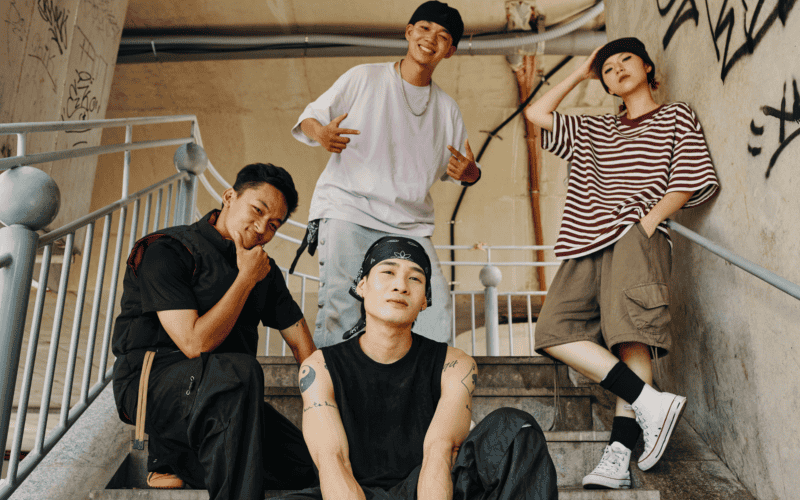
- K-pop Groups with Non-Korean Members: Some K-pop groups that include Chinese members, or members of other non-Korean nationalities, have occasionally managed to navigate the restrictions more successfully. This is often because they can be framed as more "international" or even "Chinese-friendly" in their composition, potentially softening the perception of purely South Korean cultural import.
- Merchandise Pop-up Stores: Temporary stores selling official K-pop merchandise, though not featuring live artist appearances, have sometimes been permitted. These pop-ups often draw massive queues, demonstrating the enduring demand and purchasing power of Chinese fans, even in the absence of concerts.
- Older South Korean Series on Digital Platforms: While new dramas face significant hurdles, a reduced catalog of older South Korean series can still be found on Chinese digital platforms. These are typically titles from before 2016 or those that have gone through rigorous approval processes. Newer, highly anticipated productions often circulate through unofficial channels, relying on fan translations and illegal downloads, highlighting the gap between official policy and popular demand.
These limited exceptions underscore the selective nature of the ban, which appears designed to control the flow of new, influential content while allowing some older or less impactful forms of cultural exchange to persist, perhaps to avoid a complete alienation of the youth demographic.
Adapting to a Post-China K-Pop Landscape
The prolonged absence of the Chinese market, once a cornerstone of their expansion strategies, forced South Korean entertainment companies to undertake a radical reorganization of their global outreach. The industry’s adaptability and resilience became paramount.
- Japan as the Primary Market: Japan, already a strong and mature market for K-pop, solidified its position as the primary revenue generator outside of South Korea. Japanese fans consistently demonstrate high engagement and purchasing power, supporting extensive tours, album sales, and merchandise. K-pop companies deepened their localization efforts in Japan, releasing Japanese versions of songs and actively participating in local media.
- Aggressive Expansion into Western Markets: The United States and North America emerged as one of the largest frontiers for growth. K-pop groups increasingly targeted these markets with extensive tours, English-language collaborations, and appearances on major Western television shows and music festivals. The success of groups like BTS and BLACKPINK in breaking into the Billboard charts and selling out stadiums across the U.S. and Europe is a testament to this strategic pivot.
- Diversification Across Regions: Beyond North America and Japan, K-pop companies intensified their focus on Southeast Asia (e.g., Thailand, Vietnam, Philippines), Latin America (e.g., Mexico, Brazil), and even parts of the Middle East and Europe. This geographical diversification ensured that the industry was not overly reliant on any single foreign market.
- Localization and Global Auditions: Companies increasingly launched global audition programs, recruiting talent from various nationalities to create more diverse and internationally appealing groups. This strategy helps to build fanbases in different regions by including members who share cultural ties or language proficiency with those markets.
This strategic shift means that while China remains a relevant and potentially lucrative market, it is no longer the absolute center of expansion for K-pop companies. The industry has demonstrated its ability to thrive and grow exponentially on a global scale, even without direct access to mainland China’s vast consumer base. K-pop’s global revenue has continued to climb steadily, with exports of music, dramas, and related content reaching new heights year after year, proving the industry’s robustness despite the significant barrier in China.
Glimmers of Hope? Diplomatic Maneuvers and Future Prospects
Despite the entrenched nature of the Hallyu ban, recent diplomatic activities have periodically sparked rumors of a possible, albeit gradual, thaw. Meetings between high-ranking South Korean officials and their Chinese counterparts, including discussions between the South Korean President (currently Yoon Suk-yeol) and Chinese President Xi Jinping, have led to speculation about improved bilateral relations.
The motivations for a potential softening of China’s stance could be varied:
- Economic Considerations: China’s own economy has faced challenges, and a prolonged cultural freeze could be seen as counterproductive in the long run, particularly given the strong public demand for K-pop. Reopening the market could offer a boost to its entertainment sector through collaborations and increased consumer spending.
- Regional Stability: Both countries share a vested interest in regional stability and addressing common challenges, such as denuclearization of North Korea. Improved cultural ties could be seen as a way to foster goodwill and facilitate broader diplomatic cooperation.
- Perception Management: For China, lifting the unofficial ban could also be a soft power move, demonstrating flexibility and openness on the global stage, especially as it seeks to counter criticisms regarding its cultural policies.
However, signals from Beijing indicate that any change would likely be slow, cautious, and highly contingent on broader geopolitical dynamics. The THAAD issue, though less prominent in daily discourse, remains a sensitive point. Furthermore, China’s commitment to promoting its own cultural industries and maintaining control over imported content suggests that a full return to the pre-2016 era is unlikely in the near future. Any "opening" would likely be carefully managed, perhaps allowing specific artists or limited content under strict conditions, rather than a sweeping reversal.
In the meantime, BTS continues its remarkable trajectory, conquering stadiums and captivating audiences across continents, cementing its status as a global cultural phenomenon. Yet, for their dedicated Chinese fans and for the K-pop industry at large, the vast market of mainland China remains an elusive prize, a poignant symbol of how geopolitical tensions can cast a long shadow over the vibrant world of culture and entertainment. The enduring question of "when, or if, BTS will ever perform in China" continues to resonate, highlighting the complex interplay of diplomacy, economics, and popular culture in the 21st century.




 Eva Lovia
 Julia Chirkova
 Nila Kartika Wati
 Lina Irawan
 Jia Lissa