
The 1995 science fiction masterpiece 12 Monkeys stands as a definitive pillar of dystopian cinema, a work that has transitioned from a mid-90s box office success to a prophetic cultural touchstone. Directed by Terry Gilliam and written by David and Janet Peoples, the film explores the volatile intersections of time travel, viral pandemics, and the fragility of human perception. Starring Bruce Willis and Brad Pitt, the production challenged the conventional blockbuster tropes of its era, offering instead a gritty, nonlinear narrative that continues to provoke academic and critical discussion nearly three decades after its initial release. As the film finds a renewed audience on streaming platforms such as HBO Max, its themes of societal collapse and the inevitability of fate have acquired a startling new relevance in a post-pandemic world.
Narrative Architecture and the Circularity of Fate
The plot of 12 Monkeys is set against a bleak future in the year 2035. Following the release of a catastrophic virus in 1996 that eradicated 99% of the human population, the few remaining survivors have retreated into a claustrophobic, subterranean existence. The surface of the Earth has been reclaimed by nature and wild animals, leaving humanity to dwell in cages beneath the ruins of major cities. James Cole, portrayed by Bruce Willis, is a "volunteer" prisoner selected by a panel of scientists to travel back in time. His mission is not to prevent the outbreak—a task the scientists deem impossible—but to gather information on the original, unmutated virus so that a cure can be developed in the future.
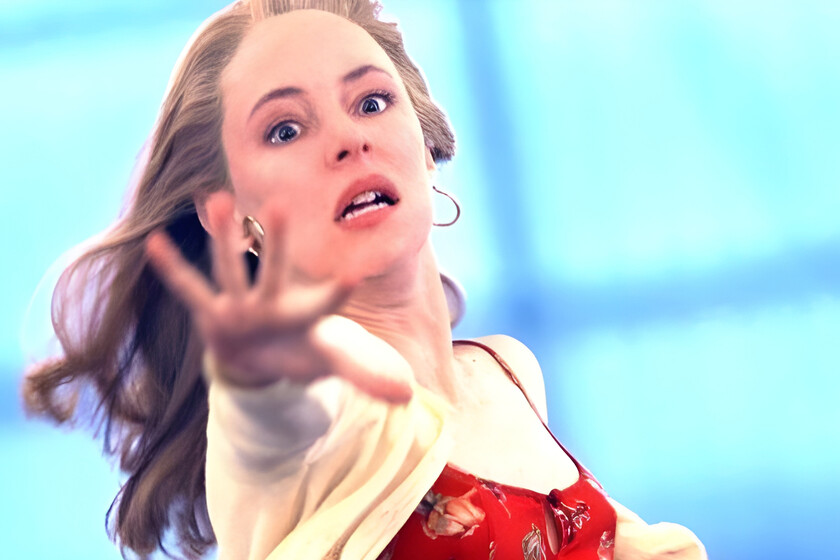
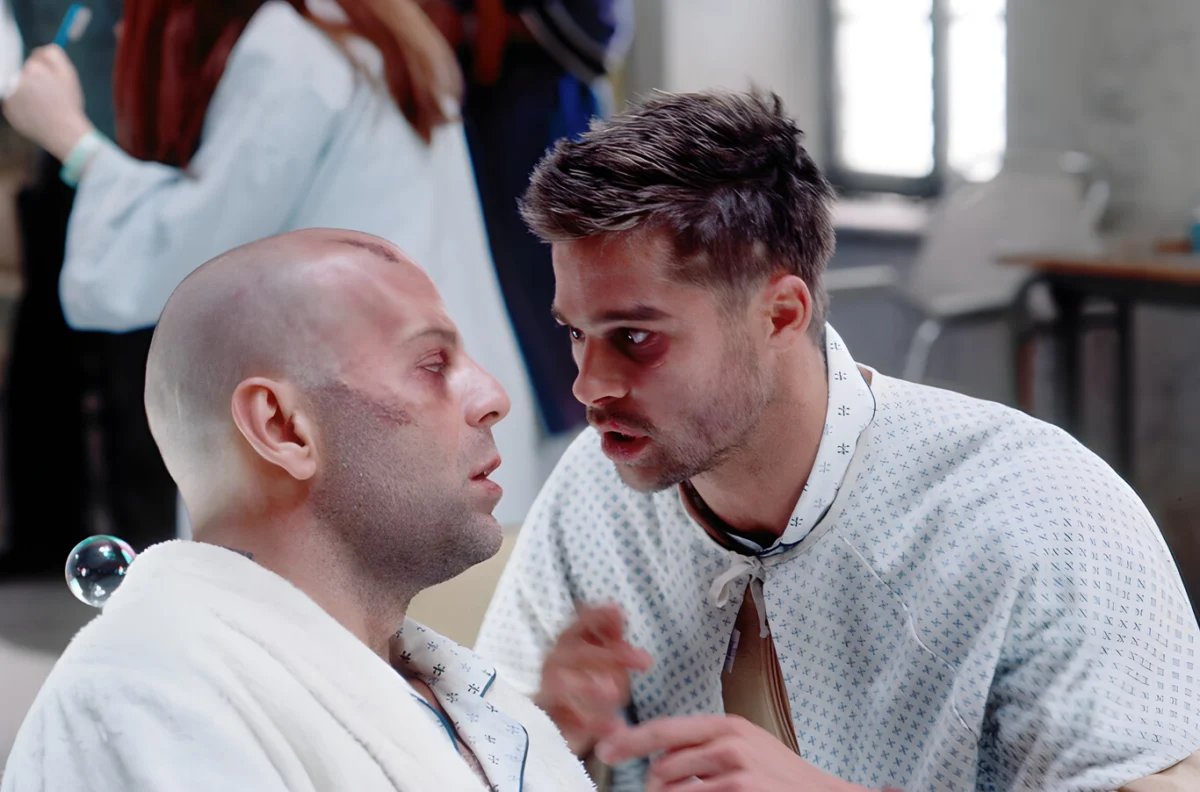
The film’s complexity arises from its handling of temporal mechanics. Due to the experimental and imprecise nature of the time-travel technology, Cole is accidentally sent to 1990, six years before the apocalypse. There, his warnings of global doom result in his incarceration in a psychiatric institution. It is within this setting that he encounters Dr. Kathryn Railly (Madeleine Stowe), a psychiatrist who initially views him as a paranoid schizophrenic, and Jeffrey Goines (Brad Pitt), the fanatical son of a prominent virologist. The narrative meticulously weaves a "bootstrap paradox," where Cole’s attempts to investigate the "Army of the 12 Monkeys"—the group believed to be responsible for the plague—become inextricably linked to the very events he is trying to document. This sense of fatalism, often referred to as the "Cassandra Complex," serves as the film’s emotional and philosophical core.
Production Origins and the Influence of La Jetée
The genesis of 12 Monkeys is rooted in the 1962 French short film La Jetée, directed by Chris Marker. Consisting almost entirely of still photographs, La Jetée told the haunting story of a post-apocalyptic prisoner sent through time to find a way to save the present. While Terry Gilliam’s adaptation expanded the 28-minute short into a sprawling feature-length thriller, it retained the original’s obsession with memory and the haunting image of a man witnessing his own death.
Executive producer Robert Cavallo and screenwriter David Peoples sought to bring a more visceral, kinetic energy to Marker’s concept. When Terry Gilliam was brought on to direct, he brought a distinct visual vocabulary characterized by "steampunk" aesthetics, wide-angle lenses, and cluttered, industrial set designs. Gilliam, known for his battles with studios over creative control—most notably on his 1985 film Brazil—was granted final cut privilege on 12 Monkeys, provided the film met certain budget and rating requirements. This creative freedom allowed the director to maintain the film’s bleak ending and non-traditional structure, which were considered risky by Universal Pictures at the time.

Casting and Career-Defining Performances
The success of 12 Monkeys is frequently attributed to the unexpected casting of its leads. Bruce Willis, then at the height of his "Action Hero" fame following the Die Hard franchise, took a significant pay cut and agreed to work for a lower salary to collaborate with Gilliam. In 12 Monkeys, Willis shed his invulnerable persona to play a man who is confused, physically battered, and increasingly uncertain of his own sanity. His performance is noted for its vulnerability, as Cole oscillates between the stoic soldier of the future and a man falling in love with the sensory beauty of a world he knows is doomed.
Conversely, Brad Pitt’s portrayal of Jeffrey Goines marked a pivotal moment in his career. At the time, Pitt was largely viewed as a Hollywood heartthrob. His hyperactive, twitchy, and disturbing performance as the mentally ill Goines shocked critics and earned him his first Academy Award nomination for Best Supporting Actor. To prepare for the role, Pitt reportedly spent time in a psychiatric ward and practiced a rapid-fire delivery that Gilliam later enhanced by taking away the actor’s cigarettes, ensuring a genuine sense of nervous irritability. The chemistry between Willis, Pitt, and Madeleine Stowe provided the necessary grounded performances to anchor Gilliam’s often surreal and chaotic visual style.
Critical Reception and Commercial Impact
Upon its release in late December 1995, 12 Monkeys was met with widespread critical acclaim. Reviewers praised the film for its intellectual depth and its refusal to provide easy answers. Variety described it as a "spectacularly designed" film that reinvented the sci-fi genre, while The Hollywood Reporter lauded its "visual density" and "narrative daring." The film currently maintains an 88% approval rating on Rotten Tomatoes, with a consensus that highlights the film’s ability to balance its eccentricities with a compelling, high-stakes plot.
Financially, the film outperformed industry expectations. Produced on a budget of approximately $29.5 million, it grossed $168.8 million worldwide. Its success proved that there was a substantial market for "high-concept" science fiction that challenged the audience’s intelligence. The film’s profitability and critical standing cemented Terry Gilliam’s reputation as a director capable of delivering commercially viable art-house sensibilities within the studio system.
Historical Chronology of the 12 Monkeys Legacy
The impact of the film extended far beyond its initial theatrical run, leading to several milestones in the decades that followed:
- 1995 (December): Limited release in the United States, followed by a wide release in January 1996.
- 1996 (March): Brad Pitt wins the Golden Globe for Best Supporting Actor and receives an Oscar nomination.
- 1997-2005: The film becomes a staple of "Best Sci-Fi" lists, frequently cited alongside Blade Runner and 2001: A Space Odyssey for its influence on the genre.
- 2015: Syfy premieres a television adaptation of 12 Monkeys. While it deviates significantly from the film’s plot, it ran for four seasons and was praised for its intricate long-form storytelling regarding time travel and destiny.
- 2020: During the COVID-19 pandemic, the film saw a massive surge in streaming numbers. Analysts and journalists noted the "eerie" similarities between the film’s portrayal of a sudden global shutdown and the real-world crisis, particularly the themes of scientific skepticism and societal panic.
Analysis of Themes: Mental Health and Environmentalism
A significant portion of the film’s lasting power comes from its ambiguity regarding the protagonist’s mental state. For much of the second act, the audience is invited to question whether James Cole is truly a time traveler or simply a man suffering from a severe psychotic break. This exploration of the subjective nature of reality was ahead of its time, pre-dating similar themes in films like The Matrix or Inception. By placing a "hero" in a mental institution where his truths are dismissed as delusions, Gilliam critiques the rigid structures of modern psychiatry and the way society silences those who see uncomfortable truths.

Furthermore, 12 Monkeys carries a strong environmentalist subtext. The "Army of the 12 Monkeys" is revealed to be a radical animal rights group, and while they are ultimately a red herring in the search for the virus’s origin, their message resonates throughout the film. The imagery of animals—lions, bears, and flamingos—roaming the desolate streets of Philadelphia serves as a haunting reminder of a world where humans are no longer the dominant species. The film suggests that the Earth may be better off without the destructive presence of human civilization, a misanthropic sentiment that gives the story its dark, cynical edge.
Conclusion and Enduring Relevance
12 Monkeys remains a masterclass in atmospheric storytelling and thematic complexity. It serves as a reminder of an era in Hollywood when major studios were willing to invest in challenging, director-driven visions that did not rely on existing intellectual property or superhero tropes. The film’s conclusion—a tragic, perfect loop that emphasizes the impossibility of changing the past—continues to be one of the most discussed endings in cinematic history.
For modern viewers, the film is more than just a nostalgic relic of the 1990s. In an age characterized by global health anxieties, environmental concerns, and a fracturing sense of shared reality, the journey of James Cole feels increasingly like a mirror held up to the present. Whether viewed as a cautionary tale about biological warfare or a philosophical meditation on the nature of time, 12 Monkeys remains an essential viewing experience for anyone seeking cinema that is as intellectually demanding as it is visually arresting. Its availability on platforms like HBO Max ensures that new generations will continue to be haunted by the mystery of the virus and the tragic fate of the man who tried to see the future.

0 Comments