
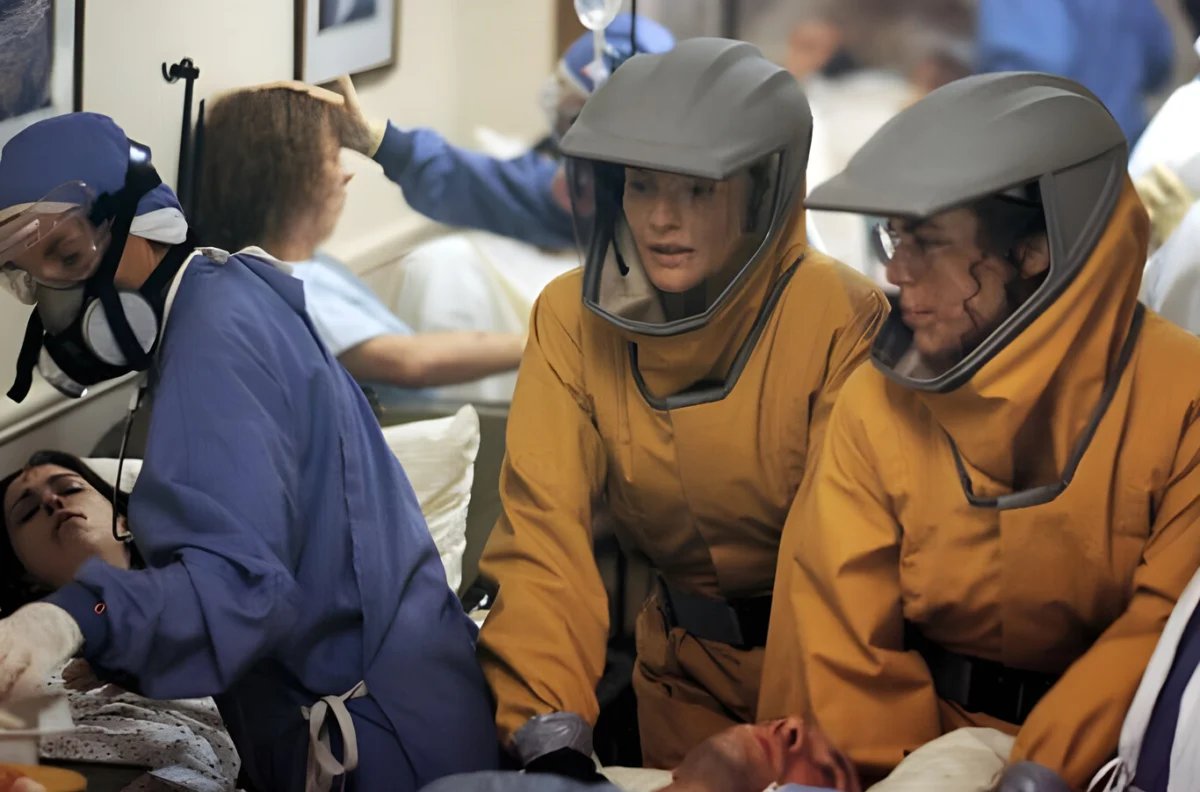
When Wolfgang Petersen’s medical thriller Outbreak premiered in March 1995, it was marketed as a high-stakes race against time, a cinematic exercise in "what-if" scenarios regarding biological warfare and viral mutations. Starring Dustin Hoffman, Morgan Freeman, Rene Russo, and Donald Sutherland, the film presented a terrifying vision of a fictional virus named "Motaba" decimating a small American town. While critics at the time praised its tension and star power, few could have predicted that the film would serve as a cultural touchstone for two major public health crises: the 1995 Ebola outbreak in Zaire and the 2020 COVID-19 pandemic. Today, as the film finds a renewed audience on streaming platforms like Netflix, its narrative serves as a sobering reminder of the intersection between science, military intervention, and public policy during a biological emergency.
The Narrative Framework: From Zoonotic Jump to Community Spread
The plot of Outbreak begins in 1967 in the Motaba River Valley in Zaire, where a deadly hemorrhagic fever with a 100% mortality rate is discovered among mercenaries. To contain the threat, the United States military destroys the camp, ostensibly to prevent the virus from spreading, but secretly preserving a sample for potential use as a biological weapon. Fast-forwarding to 1995, the virus resurfaces in Zaire. Colonel Sam Daniels (Dustin Hoffman), a virologist from the United States Army Medical Research Institute of Infectious Diseases (USAMRIID), is sent to investigate.
The film meticulously depicts the mechanism of zoonotic transmission—the process by which a virus jumps from animals to humans. In this case, the vector is a white-headed capuchin monkey smuggled into the United States. The virus enters the human population through a series of accidents: a scratch at a pet shop, a broken vial in a laboratory, and most famously, a sneeze in a crowded movie theater in the fictional town of Cedar Creek, California. This specific scene has become one of the most cited moments in medical cinema, illustrating the terrifying efficiency of airborne transmission in confined spaces.

A Case of Life Imitating Art: The 1995 Kikwit Ebola Outbreak
One of the most remarkable aspects of the film’s history is its timing. In May 1995, just two months after the film’s release, a real-world outbreak of Ebola Hemorrhagic Fever occurred in Kikwit, Zaire (now the Democratic Republic of the Congo). The parallels were so striking that they blurred the lines between fiction and news reporting. The Kikwit outbreak resulted in 315 confirmed cases and 244 deaths, a staggering 77% fatality rate.
Just as the fictional Motaba virus in the film was characterized by rapid onset and internal hemorrhaging, the Kikwit Ebola strain showcased the devastating speed of Filoviridae viruses. The international response to Kikwit involved the World Health Organization (WHO) and the Centers for Disease Control and Prevention (CDC), mirroring the inter-agency friction depicted in the film between USAMRIID and civilian health authorities. The real-world event cemented Outbreak‘s reputation not just as a thriller, but as a prescient warning about the fragility of global health security.
Supporting Data: Production, Box Office, and Scientific Reception
At the time of its release, Outbreak was a significant commercial success. Produced on a budget of approximately $50 million, the film grossed $67.6 million domestically and an additional $122.2 million internationally, totaling $189.8 million. Adjusted for inflation, this figure represents a major blockbuster performance, underscoring the public’s fascination with—and fear of—pathogens.
From a scientific perspective, the film received a mixed reception. Real-world virologists at USAMRIID and the CDC noted that while the film correctly depicted Bio-Safety Level 4 (BSL-4) containment suits and the bureaucratic hurdles of quarantine, it took significant creative liberties with the speed of vaccine development. In the film, a cure is synthesized and distributed in a matter of hours. In reality, as seen with both Ebola and COVID-19, the development of vaccines and therapeutics requires months or years of rigorous clinical trials. Despite these exaggerations, the film is credited with popularizing the concept of "Patient Zero" and the logistical nightmare of enforcing a "Cordon Sanitaire" (a guarded isolation zone).

The COVID-19 Resurgence: Why Outbreak Trended in 2020
Twenty-five years after its theatrical debut, Outbreak experienced a massive surge in viewership. In March 2020, as the World Health Organization officially declared COVID-19 a pandemic, the film consistently appeared in the "Top 10" lists on Netflix in the United States and several European countries. This phenomenon was not unique to Outbreak; Steven Soderbergh’s Contagion (2011) also saw a spike in interest. However, Outbreak offered a different kind of catharsis—a more traditional "hero’s journey" where a single scientist could stop a government conspiracy and save a town from destruction.
The parallels to the 2020 pandemic were undeniable. The film’s depiction of ignored warnings from scientists, the debate over masks and isolation, and the tension between economic interests and public safety resonated deeply with a global audience experiencing those very issues in real-time. The film’s portrayal of Cedar Creek being placed under martial law reflected the lockdowns that were occurring globally, albeit with less military intervention in most democratic nations.
Chronology of Key Events: Movie vs. Reality
To understand the impact of Outbreak, it is useful to look at the timeline of events that shaped the genre and the public’s understanding of epidemics:
- 1994: Richard Preston publishes The Hot Zone, a non-fiction thriller about the origins of Ebola and Marburg viruses. This book ignites Hollywood’s interest in viral thrillers.
- March 10, 1995: Outbreak is released in U.S. theaters.
- May 1995: The Ebola outbreak in Kikwit, Zaire, makes international headlines, drawing direct comparisons to the film.
- 2003: The SARS outbreak in Asia provides a real-world example of how a respiratory virus can spread via modern air travel, a theme central to the film’s middle act.
- 2014-2016: The Western African Ebola virus epidemic becomes the most widespread outbreak of the disease in history, further validating the film’s focus on international containment.
- March 2020: COVID-19 reaches pandemic status; Outbreak becomes one of the most-watched films on streaming platforms worldwide.
Broader Impact: The Ethics of Quarantine and Military Involvement
Outbreak delves into the ethical complexities of public health policy. The conflict between Morgan Freeman’s General Billy Ford and Donald Sutherland’s General Donald McClintock represents the dual nature of military involvement in health crises. Ford represents the pragmatic, if compromised, pursuit of a cure, while McClintock represents the "scorched earth" policy—the idea that the only way to save the many is to sacrifice the few.

This thematic element remains relevant in modern discourse. The use of the National Guard to distribute vaccines or the role of the military in setting up field hospitals are echoes of the logistical power depicted in the film. However, the film also warns of the dangers of transparency. The plot point regarding the government’s secret possession of the virus for bioweapon research mirrors contemporary concerns regarding "gain-of-function" research and the transparency of laboratory environments.
Official Responses and Lasting Implications
While there were no "official" government responses to the film itself in 1995, the movie is often cited in academic papers regarding the public perception of science. It contributed to a phenomenon where the public expects rapid, dramatic solutions to complex biological problems. On the positive side, it inspired a generation of students to pursue careers in virology and epidemiology, much like Top Gun did for naval aviation.
The broader implication of Outbreak lies in its ability to humanize the statistics of an epidemic. By focusing on the residents of Cedar Creek, the film moved the conversation from abstract numbers to the reality of community loss. It also highlighted the importance of international cooperation, as the virus knows no borders—a lesson that the global community struggled to implement during the early stages of the COVID-19 pandemic.
Conclusion: A Cinematic Warning Still Relevant Today
Outbreak remains a foundational piece of the "medical thriller" subgenre. While its action-heavy third act—complete with helicopter chases—leans more toward Hollywood spectacle than scientific reality, its core premise remains unsettlingly accurate. The film correctly identified the primary threats to modern civilization: the destruction of natural habitats leading to zoonotic jumps, the speed of global travel, and the danger of political interference in scientific communication.

As it continues to stream on Netflix, Outbreak serves as more than just a piece of 90s nostalgia. It is a document of the anxieties of its time that accurately predicted the anxieties of the future. For viewers today, the film is a reminder that while science has the power to develop cures, the ultimate success of any pandemic response relies on truth, coordination, and the lessons learned from both history and, occasionally, the prophetic lens of cinema.

0 Comments