
The fashion landscape of the mid-2020s is witnessing an unexpected yet profound revival of one of the most polarizing garments of the 20th century: the lace legging. Originally popularized during the high-octane glamour and subversive street style of the 1980s, these sheer, textured hosiery-adjacent pieces have transitioned from the archives of pop culture history back onto the global stage. While fashion cycles are famously recursive, the return of lace leggings signifies more than a mere nostalgia trip; it represents a convergence of high-fashion experimentation, the democratization of trends by retail giants like Zara, and a shift in consumer preference toward "maximalist layering" and the "coquette" aesthetic. As the industry looks toward the autumn 2026 season, the lace legging has solidified its status not as a fleeting fad, but as a versatile staple of the contemporary wardrobe.
The Catalyst of the Resurgence: From High-Fashion Runways to the High Street
The re-emergence of lace leggings did not happen in a vacuum. Industry analysts point to the 2025 collections of avant-garde labels such as Vaquera and Yuhan Wang as the primary catalysts for the trend’s modern iteration. These designers, known for their subversion of traditional femininity and historical silhouettes, utilized lace not as a delicate undergarment, but as a structural, visible component of outerwear. Vaquera, in particular, leaned into the "indie sleaze" and "grunge" revivals, pairing sheer lace with oversized leather and distressed denim, while Yuhan Wang utilized the fabric to explore themes of romanticism and power.

Following these high-fashion endorsements, the trend quickly migrated to the streets of major fashion capitals—Paris, Milan, and New York. By the time the industry began preparing for the autumn 2026 collections, the garment had undergone a process of "trend democratization." This was most visibly evidenced by the strategic pivot of Zara, the flagship brand of the Inditex group. By introducing black, calf-length lace leggings into their seasonal rotations, Zara signaled to the mass market that the look was no longer reserved for the runway or the stage. The availability of these pieces at an accessible price point has allowed the trend to permeate various demographics, moving from niche fashion circles to mainstream consumer consciousness.
Historical Chronology: The Madonna Archetype and the 1984 Revolution
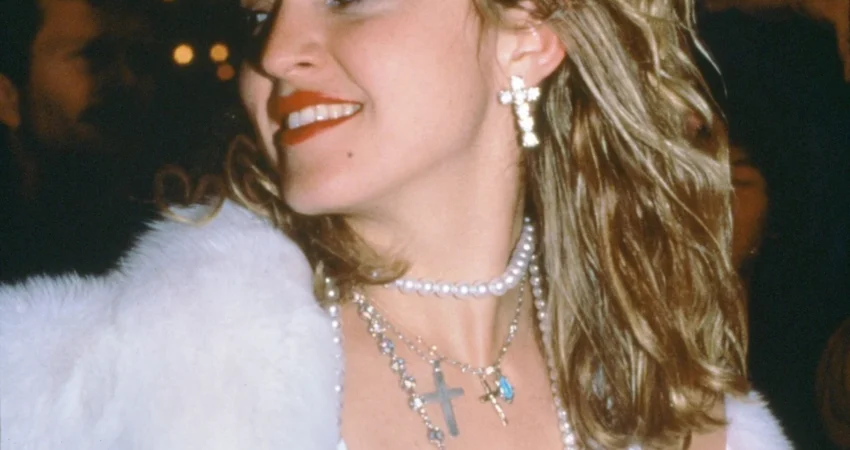
To understand the cultural weight of the lace legging, one must look back to 1984, a watershed year for both music and fashion. The primary architect of this look was Madonna, whose second studio album, Like a Virgin, fundamentally altered the visual language of the decade. Madonna’s "rebellious bride" aesthetic—characterized by crosses, messy bleached hair, and, most importantly, layers of white and black lace—became a leitmotif for an entire generation.
The chronology of the lace legging’s first wave can be traced through several key cultural markers:

- September 1984: Madonna performs "Like a Virgin" at the inaugural MTV Video Music Awards. Her outfit, featuring a bustier and lace accents, sparks a global demand for visible lace as outerwear.
- 1985: The release of the film Desperately Seeking Susan solidifies the "street urchin" look. Madonna’s character wears lace leggings under skirts and dresses, a style that would be replicated by millions of "Madonna wannabes" worldwide.
- Late 1980s: Lace leggings transition from the rebellious underground to the aerobics-obsessed mainstream, often paired with oversized sweatshirts and leg warmers.
The 1980s version of the lace legging was a symbol of defiance. It took a material traditionally associated with the domestic sphere and the wedding night and dragged it into the neon-lit streets. Today’s revival retains that sense of subversion but tempers it with the minimalist sensibilities of the 2020s.
Market Data and the Nostalgia Economy
The return of lace leggings is supported by broader economic trends within the apparel industry. According to market research, the "nostalgia economy" continues to drive consumer spending, particularly among Gen Z and Millennials. Data from fashion search engines indicates a 145% year-over-year increase in searches for "lace hosiery" and "textured leggings" leading into the 2025-2026 seasons.
Furthermore, the global leggings market, valued at approximately $32.8 billion in 2022, is projected to grow at a compound annual growth rate (CAGR) of 6.5% through 2030. Within this segment, "fashion leggings"—those intended for style rather than athletic performance—are the fastest-growing subcategory. Analysts suggest that consumers are increasingly looking for "statement basics" that offer comfort while providing a high visual impact, a requirement that lace leggings meet perfectly.

Strategic Styling: The Modern Interpretations for Autumn 2026
As the trend enters the autumn 2026 cycle, the "how-to-wear" aspect has evolved. Unlike the 1980s, where the goal was often maximalist clashing, the modern approach focuses on sophisticated layering and textural contrast. Fashion editors and street style influencers have identified three primary archetypes for styling lace leggings in the current era:
1. The Monochromatic Power Look: Blazer and Pointed Heels
This approach utilizes the lace legging as a subtle textural break in an otherwise minimalist outfit. By pairing black lace leggings with a long, structured blazer and a simple tank top, the wearer creates a silhouette that is both professional and provocative. The use of pointed-toe heels elongates the leg, while the monochromatic color palette ensures the lace remains an elegant detail rather than a costume element.
2. The Festive Oversize: Cinctured Silhouettes and Strappy Sandals
For evening wear, the industry is seeing a move toward oversized blazers or tunics cinched at the waist with wide belts. This creates an hourglass figure while allowing the lace leggings to peek out from beneath the hem. When paired with high-heeled sandals, the look becomes "festive" and "party-ready," bridging the gap between formal attire and avant-garde street style.

3. The Neo-Grunge Aesthetic: Leather, Layering, and High Boots
Perhaps the closest descendant of the original 1980s look, this style focuses on the "layering" technique. In spring 2025 and moving into autumn 2026, influencers have been seen wearing white or cream lace capri leggings under leather jackets and oversized band tees. The addition of high boots—either combat style or sleek leather—adds a "rebellious" edge that pays homage to the grunge movement of the early 90s and the original Madonna era.
Industry Implications and Expert Analysis
The re-adoption of lace leggings has significant implications for the manufacturing and sustainability sectors of the fashion industry. Modern lace production has benefitted from advancements in textile technology, allowing for "stretch-lace" that is more durable and less prone to tearing than the vintage variants of the 1980s. However, the sheer nature of the fabric remains a challenge for longevity, leading some sustainability advocates to call for higher-quality construction to combat the "disposable" nature of fast-fashion hosiery.
Fashion historians suggest that the lace legging’s return is a reaction to the "quiet luxury" trend that dominated the early 2020s. After years of beige cashmere and silent branding, consumers are gravitating toward "loud" textures and historical references. "The lace legging is the antithesis of the ‘clean girl’ aesthetic," notes one industry consultant. "It is messy, it is historical, and it requires a level of styling effort that feels rewarding to a consumer base raised on social media aesthetics like ‘Coquette-core’ and ‘Victorian Goth’."

Broader Impact: A Shift in Gender and Social Norms
Interestingly, the revival of lace is not limited to womenswear. In the spirit of the gender-fluid fashion movement that has characterized the 2020s, lace textures have begun appearing in menswear collections as well, often as layering pieces under shorts or tailored trousers. This suggests that the lace legging is becoming a gender-neutral tool for self-expression, much like the leather jacket or the denim jean.
As we approach the end of 2026, the lace legging stands as a testament to the enduring power of pop culture icons. Four decades after Madonna first stepped onto a stage in lace-trimmed hosiery, the garment continues to challenge perceptions of modesty, luxury, and "good taste." Whether seen on a high-fashion runway in London or on a rack at a local Zara, the lace legging remains a potent symbol of fashion’s ability to reinvent itself while remaining tethered to its most rebellious roots.

0 Comments