
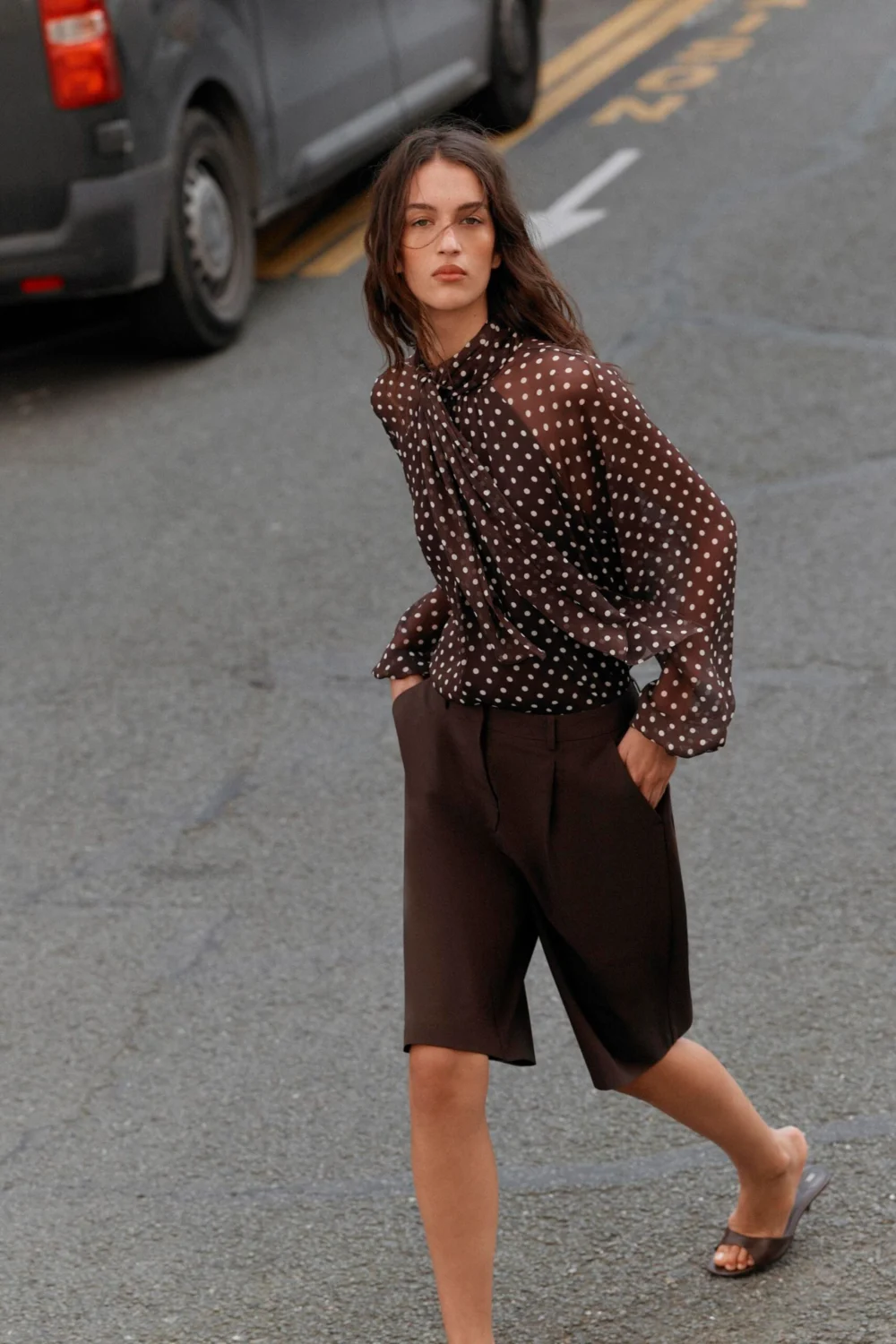
The global fashion industry is witnessing a significant resurgence of the polka dot print as a cornerstone of the Spring-Summer 2026 collections, signaling a return to classicism blended with contemporary fluid silhouettes. Zara, the flagship brand of the Inditex Group, has responded to this shift by dedicating a specialized segment of its digital and physical storefronts to polka dot apparel, emphasizing blouses that bridge the gap between high-fashion runway aesthetics and commercial accessibility. This strategic move follows high-profile presentations from luxury houses such as Valentino, Elie Saab, and MSGM, which have collectively redefined the print for the mid-decade market. Market analysts suggest that the enduring appeal of the polka dot—often referred to as the "polka dot" or "lunares"—lies in its unique ability to convey femininity and sophistication without succumbing to ephemeral "kitsch" trends, making it a stable investment for both retailers and consumers during periods of economic fluctuation in the textile sector.

Historical Chronology and the Evolution of the Polka Dot
The origins of the polka dot pattern are as diverse as they are culturally significant, providing a rich backdrop for its 2026 revival. While it is difficult to pinpoint a singular moment of invention, the pattern became deeply ingrained in Spanish heritage through the traditional attire of flamenco dancers in the 18th century. Known as "trajes de flamenca," these garments utilized the "lunares" print to create visual rhythm and movement, a characteristic that remains a point of inspiration for modern designers.
By the mid-19th century, the pattern gained its English name from the "polka" dance craze that swept across Europe and the United States. Although the dance and the print had no direct stylistic link, the marketing of "polka" branded products—including hats, jackets, and fabrics—led to the nomenclature that persists today. The 20th century saw the pattern transition from a folk motif to a symbol of pop culture and high fashion. In the 1920s, Disney’s Minnie Mouse debuted with her iconic red-and-white polka dot dress, while the 1940s and 1950s saw the print become synonymous with the "pin-up" aesthetic and Christian Dior’s "New Look."

The 1980s and 1990s marked a pivotal era for the print’s association with modern royalty. Diana, Princess of Wales, became perhaps the most influential precursor of the contemporary polka dot trend. Her frequent use of the print for official engagements—ranging from structured blazers to flowing silk dresses—cemented the pattern’s reputation as a tool for "approachable elegance." Fashion historians note that the current 2026 collections frequently reference the "Diana aesthetic," utilizing the print to balance traditional decorum with a sense of playful modernity.
Runway Influence and the Spring-Summer 2026 Landscape
The current dominance of polka dots in the retail sector is a direct reflection of the Spring-Summer 2026 runway cycle. Designers have moved away from the rigid, geometric applications of the past, opting instead for textiles that prioritize movement and transparency.

- Valentino: Under its latest creative direction, the house showcased polka dots on diaphanous fabrics, utilizing varying scales of dots to create optical depth. The collection emphasized the "power of the blouse," featuring oversized bows and dramatic necklines.
- Elie Saab: Known for red-carpet glamour, Saab’s SS26 collection integrated polka dots into ethereal, floor-length silhouettes and fluid separates. The focus was on monochromatic palettes, proving that the print can function as a neutral base for complex embroidery.
- MSGM: This house took a more avant-garde approach, mixing polka dots with asymmetrical cuts and vibrant colors, targeting a younger demographic that views the print as a tool for "maximalist" expression.
Zara’s interpretation of these trends for the 2026 season involves a curation of blouses that mirror these high-fashion elements—specifically the use of pussy-bow collars, balloon sleeves, and peplum waists—while maintaining a price point accessible to the mass market.
Strategic Product Analysis: Zara’s SS26 Collection
The 2026 collection from Zara highlights three distinct design directions that reflect broader consumer behavior and color theory for the season.

The Rise of Earth Tones as Spring Neutrals
A standout piece in the current lineup is the chocolate-toned blouse featuring white polka dots. While the Pantone Color of the Year for 2026 is "Cloud Dancer"—a serene, creamy off-white—market data shows a surprising holdover of "earthy" tones like deep brown. Historically reserved for autumn, brown has transitioned into a year-round neutral. Zara’s high-neck, fluid-sleeve design in this palette is intended for the "trans-seasonal" wardrobe, allowing consumers to pair the item with white linen trousers for summer or dark denim for cooler spring evenings.
The "Lady-Like" Revival and Voluminous Silhouettes
The collection also features a white-and-black balloon-sleeve blouse with an integrated necktie. This silhouette directly addresses the "coquette" and "ladylike" trends that have gained traction on social media platforms. The use of the "silueta globo" (balloon silhouette) provides a structural contrast to the softness of the print. Industry experts identify this as a "hero piece" for the brand, as it evokes the nostalgia of the 1980s power-dressing era while utilizing modern, lightweight synthetics and recycled polyesters that align with Inditex’s sustainability goals.

The Return of the 2010s Peplum
In a move that signals the cyclical return of early 21st-century fashion, Zara has introduced halter-neck blouses with peplum hems. Often associated with the "indie-sleaze" or "preppy" aesthetics of 2010—popularized by media such as Gossip Girl—the peplum is being reintroduced in 2026 as a sophisticated architectural detail. By combining this nostalgic cut with a classic polka dot print, the brand appeals to millennial consumers looking for "retro-modern" professional wear.
Market Data and Economic Implications
The decision to lean heavily into a specific print like polka dots is backed by robust market analytics. According to recent retail reports, the global apparel market is expected to see a 4.2% CAGR through 2026, with a significant portion of growth driven by the "affordable luxury" segment.

Inditex’s fast-fashion model—which allows for a "design-to-shelf" turnaround of approximately three weeks—enables the company to capitalize on viral trends more effectively than traditional retailers. By monitoring real-time sales data from its global fleet of stores, Zara can adjust production volumes for polka dot garments, minimizing the risk of unsold inventory. Furthermore, the "polka dot" segment serves as a strategic hedge; unlike highly specific graphic prints or "micro-trends," polka dots have a high resale value and long-term wearability, which appeals to an increasingly eco-conscious consumer base.
Broader Impact on the Fashion Ecosystem
The resurgence of polka dots in 2026 carries implications beyond mere aesthetics. It represents a broader industry shift toward "reliable fashion." Following years of experimental and often polarizing trends—such as "ugly-chic" or extreme "streetwear"—the return to mid-century motifs suggests a consumer desire for stability and timelessness.

Professional stylists and industry consultants note that the polka dot print serves as a "gateway" for consumers who are traditionally hesitant to wear patterns. Because the print is mathematically balanced and usually limited to two colors, it is perceived as less "busy" than florals or animal prints. This psychological comfort factor is a key driver for the high sell-through rates currently observed in Zara’s "lunares" department.
Moreover, the integration of these prints into "work-from-anywhere" wardrobes reflects the changing nature of professional attire. A polka dot blouse provides enough visual interest for video conferencing while remaining comfortable enough for a hybrid work environment. As the Spring-Summer 2026 season progresses, it is expected that other major retailers like H&M, Mango, and Uniqlo will follow Zara’s lead, further saturating the market with varied iterations of the print.

In conclusion, the Spring-Summer 2026 season marks a sophisticated chapter for the polka dot. Through a combination of historical reverence, runway inspiration, and strategic retail execution, the print has reaffirmed its status as an essential element of the modern woman’s wardrobe. Zara’s specific focus on fluid blouses, earth-toned palettes, and nostalgic silhouettes like the peplum ensures that the trend remains fresh, relevant, and commercially dominant in an ever-evolving fashion landscape.

0 Comments