
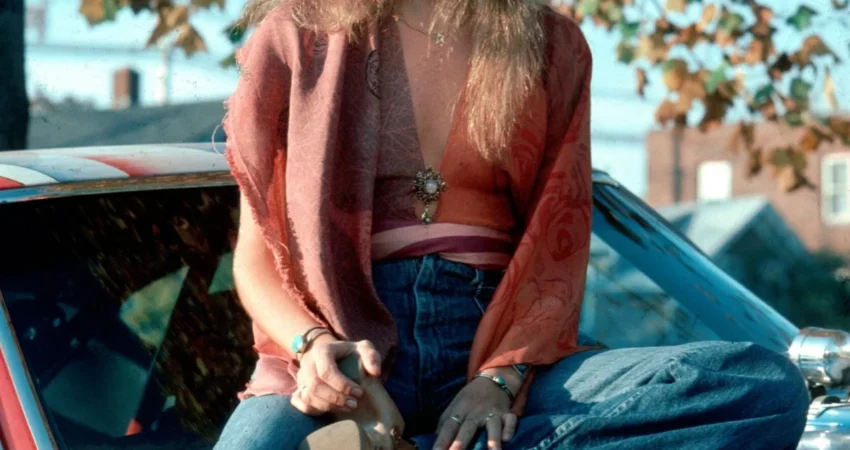
The fashion industry has officially signaled a decisive return to the silhouettes of the 1970s for the Autumn-Winter 2026 season, positioning palazzo jeans and bohemian blouses as the definitive ensemble for the transition into September. This aesthetic revival, characterized by a sophisticated blend of volume and fluidity, moves away from the minimalist constraints of previous years toward a more expressive, historically-informed wardrobe. Industry leaders and luxury houses have recalibrated their collections to emphasize the elongated lines and romantic textures that once defined the disco and folk eras, proving that the sartorial language of fifty years ago remains a potent tool for modern self-expression.

The Architectural Appeal of Palazzo Jeans
Palazzo jeans, recognized by their dramatically wide legs and high-waisted construction, serve as the structural foundation for this season’s primary trend. Unlike the flare or bootcut models that have appeared sporadically in recent years, the 2026 palazzo iteration focuses on a continuous width from the hip or mid-thigh down to the floor. This design choice is intended to create an uninterrupted vertical line, effectively lengthening the wearer’s silhouette—a technique pioneered by mid-century couturiers and popularized by the youth movements of the 1970s.
Contemporary iterations from brands such as Diesel and Massimo Dutti demonstrate a technical evolution in denim manufacturing. These houses are utilizing lighter-weight, high-drape denim blends that allow the trousers to move with the fluidity of silk while maintaining the rugged durability associated with workwear. The high-rise waist remains a non-negotiable element of the design, providing a necessary anchor for the voluminous fabrics of the accompanying blouses.

The Bohemian Blouse: A Study in Fluidity and Texture
If the palazzo jean provides the structure, the bohemian blouse provides the soul of the Autumn-Winter 2026 look. This season, designers have moved beyond simple "boho-chic" tropes to deliver garments of immense technical complexity. Brands including Chloé, Etro, and Zimmermann have led the charge, presenting blouses that utilize intricate ruffles, floral prints, and varied transparencies.
The "boho" aesthetic of 2026 is defined by three specific sub-categories:

- The Bell-Sleeve Narrative: As seen in the collections of Chanel and Tory Burch, sleeves have become a focal point of movement. The bell or "campanada" sleeve adds a romantic, almost theatrical dimension to the outfit, balancing the width of the palazzo trousers.
- The Pussy-Bow and Lace Detail: Houses like Farm Rio have revived the tie-neck blouse, often referred to as the "lazo." This element adds a layer of 1970s executive polish to the otherwise relaxed bohemian vibe, making the look suitable for professional environments.
- Sheer Artistry: Taking inspiration from the archives of Isabel Marant, transparent fabrics—often layered over tonal camisoles or worn with bold confidence—introduce a sense of "sensual vanguardism" to the season.
Historical Chronology and Cultural Influence
The resurgence of this specific pairing is not an isolated event but the latest peak in a cyclical fashion timeline. The 1970s originally introduced these silhouettes as a reaction against the structured, boxy shapes of the 1960s. Icons such as Jane Birkin and Cher were instrumental in the original proliferation of these styles. Birkin’s preference for crochet and natural textures, contrasted with Cher’s embrace of glitter, sheer fabrics, and dramatic proportions, provided the two poles of the bohemian spectrum that designers are currently mining.
A brief timeline of the trend’s evolution reveals its staying power:

- 1970–1975: The rise of the wide-leg "palazzo" trouser as a high-fashion alternative to evening gowns.
- 2010–2014: A "boho-chic" revival led by the festival circuit, focusing on ruffles and "pirate" sleeves.
- 2024–2025: The "Quiet Luxury" movement begins to fade, giving way to "Boho-Redux" on the runways of Paris and Milan.
- 2026: The full integration of 70s silhouettes into mainstream luxury and fast-fashion sectors for the Autumn-Winter cycle.
Stylistic Synergy: How Proportions are Balanced in 2026
Achieving the correct aesthetic for September 2026 requires a precise understanding of proportion. Because both the palazzo jean and the boho blouse feature significant volume, the "tuck-in" method has become the industry-standard styling technique. By securing the blouse within the high waistband of the denim, the wearer defines the natural waistline, preventing the fabric from overwhelming the frame.
However, a new variation has emerged for the current season: the cropped bohemian blouse. Designers like Zimmermann have introduced shorter hemlines that meet the top of the high-waisted jeans perfectly, eliminating the need for tucking while maintaining a streamlined midsection. To complete the look, fashion analysts suggest the inclusion of a long trench coat or a structured blazer to provide a "frame" for the fluid garments underneath.

Footwear and Accessories: The Platform Resurgence
To support the extra length of palazzo jeans, footwear has shifted toward height and stability. Platform boots and block-heeled loafers have become the recommended accompaniments. The platform, a staple of the 1970s, serves a functional purpose in 2026 by lifting the wide hem of the jeans off the ground, ensuring the fabric drapes correctly without dragging.
Furthermore, the influence of Carolina Herrera’s 1980s aesthetic—specifically the use of pointed-toe heels with ankle straps—has been noted as a sophisticated alternative for evening wear. This "collision of eras" is a hallmark of the 2026 season, where 70s silhouettes are often finished with 80s or 90s accessory details.

Market Analysis and Industry Reactions
Market data from the first half of 2026 indicates a 22% increase in consumer searches for "wide-leg denim" compared to the same period in 2025. Retailers have responded by increasing their inventory of palazzo styles by 30%. Analysts suggest that this shift is driven by a consumer desire for comfort that does not sacrifice elegance—a "post-pandemic" evolution where the ease of loungewear is translated into high-fashion forms.
Creative directors at major fashion houses have echoed this sentiment. In recent press previews, the consensus among designers is that the 2026 customer is looking for "investment pieces with personality." The bohemian blouse, with its artisanal prints and delicate ruffles, fits this demand perfectly, offering a sense of "handcrafted" luxury that mass-produced minimalist basics often lack.

Broader Implications for the Fashion Industry
The dominance of the 70s-inspired palazzo and boho look also carries implications for sustainability. Because these silhouettes rely on classic tailoring and timeless prints (such as florals and paisleys), they are less likely to be discarded as "fast fashion" fads. The durability of the denim used by brands like True Avenue and Liu Jo suggests a move toward a more circular fashion economy, where garments are built to last multiple seasons.
Moreover, the versatility of the look—transitioning effortlessly from a weekend casual setting with loafers to a high-glamour evening event with platforms and a blazer—addresses the modern consumer’s need for a multi-functional wardrobe.

Conclusion: The September Transition
As September 2026 approaches, the transition from summer heat to autumnal coolness is being navigated through these specific sartorial choices. The "well-constructed look" mentioned by fashion critics is essentially a balancing act: the toughness of denim versus the softness of silk; the volume of the leg versus the definition of the waist; and the nostalgia of the 1970s versus the technical innovation of the 2020s.
In a landscape often crowded with fleeting digital trends, the enduring appeal of the palazzo jean and the bohemian blouse represents a return to form, elegance, and a deliberate sense of style. For the global fashion community, the message for Autumn-Winter 2026 is clear: look back to the 70s to move forward into a more sophisticated future.

0 Comments