
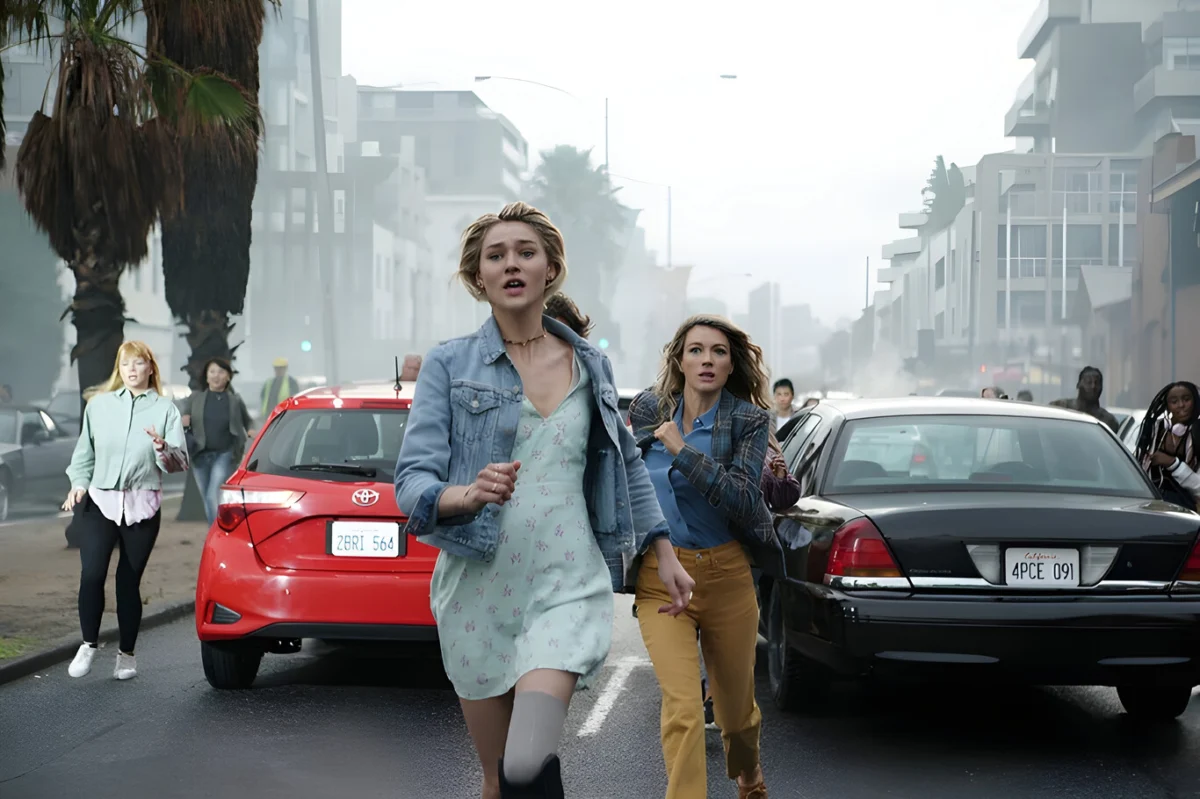
The landscape of modern television consumption has undergone a seismic shift, characterized by the "second life" phenomenon where series that experienced modest success on linear networks achieve massive, record-breaking popularity upon their transition to streaming platforms. The most recent and striking example of this trend is the science fiction drama La Brea. Originally produced by Universal Television for NBC, the series has seen an unprecedented surge in viewership since its licensing to Netflix. By blending high-concept elements of time travel, survivalist drama, and prehistoric fantasy, the show has captured an audience that eluded it during its original broadcast run, recently surpassing 1.28 billion minutes of watch time in a single week. This resurgence highlights the evolving power of streaming algorithms to revitalize dormant or concluded intellectual properties for a global audience.
Narrative Architecture: A Fusion of High-Concept Genres
La Brea operates on a premise that is both deceptively simple and narratively expansive. The story begins in modern-day Los Angeles, specifically at the iconic La Brea Tar Pits on Wilshire Boulevard. Without warning, a massive sinkhole opens in the middle of the city, swallowing hundreds of people, vehicles, and buildings. While the surface world mourns the event as a catastrophic natural disaster, those who survived the fall find themselves in a lush, dangerous, and primitive world. It is eventually revealed that the sinkhole is not a geological failure but a temporal rift, transporting the survivors to 10,000 BC.

The series effectively utilizes a dual-narrative structure. On one side, the "Down Below" survivors must navigate a landscape filled with extinct megafauna—such as dire wolves and ground sloths—and mysterious human factions who seem to have arrived via previous rifts. On the other side, the "Up Top" narrative follows the government agencies and family members left behind as they attempt to understand the science behind the phenomenon and launch a rescue mission. This structure has drawn frequent comparisons to the 2004 cult classic Lost, due to its emphasis on a disparate group of survivors unraveling a central mystery, and Jurassic Park, given its focus on human interaction with prehistoric threats.
Chronology of Production and Broadcast History
The journey of La Brea from a pilot script to a streaming sensation was marked by significant logistical challenges and shifts in the television industry.
- January 2020: NBC officially ordered a pilot for La Brea, written by David Appelbaum. However, production was almost immediately halted due to the onset of the COVID-19 pandemic.
- March 2021: Production moved to Melbourne, Australia. The Australian government provided significant tax incentives, and the diverse landscape of Victoria served as a stand-in for both prehistoric and modern Los Angeles. This move was one of the largest television investments in the region’s history.
- September 2021: Season 1 premiered on NBC. While it garnered a dedicated following and decent ratings for a network drama, it faced the uphill battle of a weekly release schedule in an era dominated by binge-watching.
- September 2022: Season 2 premiered with an expanded 14-episode order, deepening the lore of the "rifts" and introducing more complex sci-fi elements involving secret government experiments and time-traveling scientists from the future.
- January 2024: The series concluded its run on NBC with a shortened six-episode third season. The production of the final season was heavily impacted by the 2023 WGA and SAG-AFTRA strikes, leading to a condensed narrative to provide closure for fans.
- May 2024: Following its conclusion on linear television, the first two seasons were licensed to Netflix in several major markets. Within days, the show entered the Netflix Top 10, eventually peaking at over 1.2 billion minutes viewed in a seven-day window according to Nielsen streaming data.
Statistical Analysis of the "Netflix Effect"
The data surrounding La Brea’s performance on Netflix provides a clear case study for the "Netflix Effect." During its original broadcast on NBC, the show averaged roughly 4 to 5 million viewers per episode in "Live + Same Day" metrics. While these numbers were respectable for network television, they did not signal a cultural phenomenon.

However, the transition to Netflix changed the show’s trajectory. According to Nielsen’s Weekly Streaming Report for the period of May 6 to May 12, 2024, La Brea accumulated 1.28 billion minutes of viewing time. To put this in perspective, this volume of viewership often places licensed content above Netflix’s own high-budget original productions. The surge is attributed to several factors:
- Accessibility: Global audiences who do not subscribe to cable or live in regions where NBC is unavailable were able to discover the show for the first time.
- Bingeability: High-concept mysteries like La Brea benefit from consecutive viewing, which allows the audience to keep track of complex plot threads and character arcs without the interruption of a week-long gap between episodes.
- Algorithmic Recommendation: Netflix’s recommendation engine successfully identified users who had previously watched similar titles such as Manifest, The 100, or Dark, funneling millions of new viewers toward the series.
Industry Implications and the Second Window Success
The success of La Brea on streaming platforms has broader implications for the entertainment industry, particularly regarding the relationship between legacy networks and streaming giants. In recent years, networks like NBC, AMC, and HBO have increasingly utilized Netflix as a "second window" for their content. While this may seem counterintuitive—as it could potentially draw subscribers away from the networks’ own platforms (such as Peacock)—the licensing fees paid by Netflix provide immediate revenue. Furthermore, the massive exposure on Netflix can increase the value of the IP for future reboots, spin-offs, or international syndication.
Industry analysts suggest that La Brea follows in the footsteps of Manifest, another NBC series that was canceled by the network but became so popular on Netflix that the streamer eventually commissioned a final season to finish the story. While La Brea has already concluded its narrative, its performance proves that there is a significant appetite for "middle-ground" sci-fi: shows that are more ambitious than standard procedurals but more accessible than "prestige" hard science fiction.
Technical Execution and Creative Vision
The creative success of the series rests largely on the shoulders of showrunner David Appelbaum and a cast led by Natalie Zea (Eve Harris) and Eoin Macken (Gavin Harris). The production design required a sophisticated blend of practical sets in Australia and extensive digital effects to recreate extinct creatures and the prehistoric environment.
While some critics initially pointed to the show’s uneven CGI in early episodes, the production value scaled significantly in the second and third seasons. The writing staff leaned heavily into the "Mystery Box" storytelling popularized by J.J. Abrams, ensuring that every answer provided to the audience led to two more questions. This narrative hook is precisely what has kept streaming audiences engaged, leading to high completion rates—a metric that Netflix values more than raw viewership numbers.
Future Outlook and Availability
As of late 2024, the first two seasons of La Brea remain a staple of the Netflix catalog in various territories, continuing to draw consistent viewership. The third and final season, which consists of six episodes, currently resides on different platforms depending on the region, often found on Universal+ or available for purchase via Prime Video Channels.

The narrative of La Brea serves as a testament to the longevity of well-crafted science fiction. Despite the challenges of its initial broadcast and the disruptions of industry strikes, the series has found its definitive home in the digital space. It stands as a prime example of how the "Long Tail" of content—the ability for a show to remain relevant and profitable long after its premiere—has become the new standard for success in the 21st-century media landscape. For creators, the lesson is clear: a show’s "failure" or "mediocrity" on traditional television is no longer the final word on its cultural or commercial impact.

0 Comments