
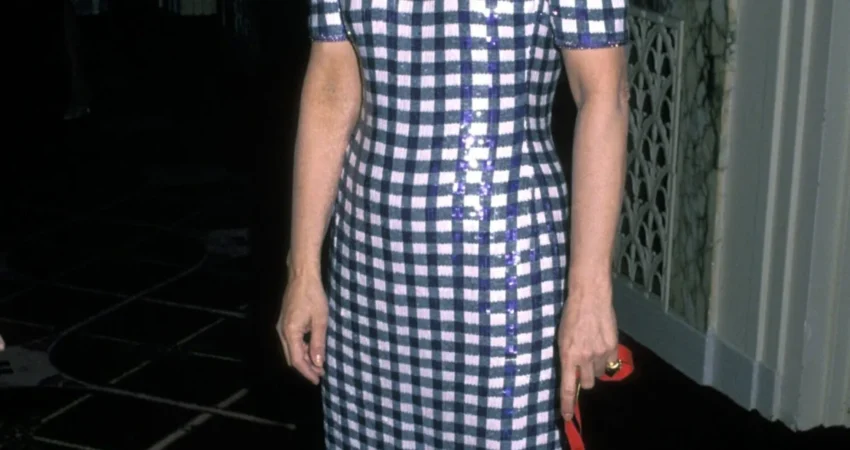
The cyclical nature of the fashion industry has once again looked to the archives of the late 20th century to redefine modern elegance, specifically centering on the sophisticated footwear choices of Carolina Herrera during the 1980s. As the Fall-Winter 2026 collections debut across major fashion capitals, the T-bar heel—a silhouette synonymous with Herrera’s personal style and her early design ethos—has emerged as the definitive footwear trend of the season. This resurgence marks a significant shift away from the more aggressive platforms of previous years, favoring instead a refined, feminine aesthetic that prioritizes structural grace and historical reverence.
Carolina Herrera, an enduring icon of classical style, became a central figure in the 1980s fashion landscape, transitioning from a celebrated socialite to a formidable designer in 1981. Throughout her career, she has been frequently photographed in T-bar heels, particularly for evening engagements and high-profile galas. Her penchant for monochromatic palettes—ranging from stark blacks and whites to bold, singular hues of emerald green and vibrant orange—often featured the T-bar heel as a grounding element. This specific shoe style, characterized by a strap that runs from the toe or vamp to a horizontal ankle strap, forming a "T" shape, has long been lauded for its ability to elongate the leg while providing more stability than a traditional pump.

The Historical Evolution of the T-Bar Silhouette
While the T-bar heel is currently experiencing a renaissance fueled by 1980s nostalgia, its origins date back significantly further. Invented in the 1930s, the T-bar was originally designed as a practical yet stylish solution for the dancers of the era. The vertical strap provided essential security for the foot during rigorous movement, while the open sides offered a lightness that suited the flapper and post-flapper sensibilities. By the mid-20th century, the silhouette had evolved into a staple of school uniforms and children’s footwear before being reclaimed by high fashion as a symbol of "retro-femininity."
In the 1980s, designers like Herrera reimagined the T-bar for the modern professional woman and the evening socialite. During this decade, the shoe was often paired with voluminous evening gowns and power suits, offering a delicate counterpoint to the era’s exaggerated shoulders and bold textiles. The Fall-Winter 2026 runways demonstrate that this versatility remains the T-bar’s greatest asset, as contemporary creative directors adapt the vintage shape to suit a wide array of modern subcultures, from the maximalist to the minimalist.
Analyzing the Fall-Winter 2026 Runway Interpretations
The current season has seen a diverse array of interpretations of the T-bar heel, with major fashion houses utilizing the silhouette to anchor their creative visions. From the romanticism of Dior to the rebellious energy of Valentino, the T-bar is being used as a canvas for innovation.

Dior and the Rebirth of French Romanticism
Under the creative direction of Jonathan Anderson for the Fall-Winter 2026 season, Dior has leaned heavily into a romanticized view of French history. Anderson’s collection references the opulence of the 18th century and the structured tailoring of the 1940s. A standout look from the collection features T-bar heels adorned with delicate beige appliqués, paired with a long, somber wool coat in a black-and-brown weave. This juxtaposition of the "sweet" footwear detail against the "serious" outerwear demonstrates the T-bar’s ability to soften a look without compromising its sophistication. Industry analysts suggest that Anderson’s use of the T-bar is a strategic move to blend Dior’s heritage with a more contemporary, eclectic sensibility.
Dries Van Noten and Maximalist Textures
The Dries Van Noten collection, designed by Julian Klausner, offers a stark contrast to traditional minimalism. Known for a fearless approach to color and texture, the house presented T-bar heels featuring intricate prints. These were styled with green patterned tights and skirts boasting pixelated floral motifs. By incorporating prints directly onto the footwear, Klausner has elevated the T-bar from a supporting accessory to a focal point of the outfit. This approach appeals to the "maximalist" consumer, proving that the T-bar can be as loud and expressive as any contemporary sneaker or boot.
The Rockstud Revival at Valentino
Alessandro Michele’s tenure at Valentino has brought a renewed focus on the house’s most successful archival elements. For Fall-Winter 2026, Michele oversaw the return of the "Rockstud" aesthetic, which dominated the early 2010s. This iteration features a prominent T-bar strap, oversized studs, and a metallic pointed toe. Styled with a short purple skirt, the shoe serves as a bridge between the punk-inspired elements of the past and the high-fashion requirements of the present. The inclusion of the T-bar strap provides a structural update to the classic stud design, offering a more secure fit and a more mature silhouette.

Givenchy’s Tribute to the Old Masters
Sarah Burton’s Fall-Winter 2026 collection for Givenchy was described as a tribute to the "Old Masters," focusing on texture, shadow, and historical craftsmanship. The Givenchy T-bar is a more sensual, open-heeled version with minimal coverage and decorative appliqués on the heel. Paired with an asymmetrical animal-print dress featuring fringe and textured sleeves, the shoe provides a necessary balance. The minimal design of the T-bar prevents the busy textures of the garment from becoming overwhelming, illustrating the shoe’s utility in high-concept styling.
Fendi’s Monochromatic Elegance
Maria Grazia Chiuri’s debut-influenced collection for Fendi focused on the power of black and white. The Fendi T-bar heel is perhaps the most direct descendant of the Herrera-style classic. Featuring a small brilliant detail and feathers at the heel, the shoe was paired with black socks and a silk midi dress with lace inserts. This look emphasizes texture over color, using the T-bar to maintain a sleek, elongated line that allows the intricate fabric work of the dress to take center stage.
Market Implications and Consumer Demand
The return of the T-bar heel is not merely an aesthetic choice by designers but a response to shifting consumer behavior in the luxury footwear market. Data from retail analytics firms suggest a growing "fatigue" regarding heavy-soled footwear and a return to "investment pieces" that offer longevity and versatility.

- Stability and Ergonomics: Unlike stiletto pumps, the T-bar offers three points of contact (the toe box, the vertical strap, and the ankle strap), which significantly improves the distribution of weight across the foot. As consumers increasingly prioritize comfort without sacrificing style, the T-bar offers a middle ground.
- The "Leg-Elongating" Effect: The vertical strap of the T-bar creates a continuous visual line from the toe to the ankle. When paired with the right hemline, this creates the illusion of height, a perennial desire in the luxury fashion market.
- Resale Value: Vintage Carolina Herrera pieces and similar archival footwear have seen a 15% increase in search volume on luxury resale platforms over the last six months. This indicates a pre-existing appetite for the silhouette before it even hit the 2026 runways.
Chronology of the T-Bar Resurgence
- 1930s: The T-bar is popularized as a dance shoe, offering security for high-energy movements.
- 1981: Carolina Herrera launches her first collection; the T-bar becomes a staple of her personal and professional brand.
- 1989: Herrera is photographed in iconic evening looks featuring the T-bar, cementing its status as a "power shoe" for the decade.
- 2010s: Valentino introduces the Rockstud, a T-bar-adjacent design that dominates the luxury market for years.
- 2024-2025: A "quiet luxury" trend begins to phase out chunky sneakers in favor of classic silhouettes.
- 2026: Major houses (Dior, Fendi, Givenchy) officially reinstate the T-bar as the primary footwear trend for the Fall-Winter season.
Broader Impact on the Fashion Industry
The re-adoption of the T-bar heel signifies a broader movement toward "heritage-informed innovation." Designers are no longer just copying the past; they are deconstructing it to meet modern needs. The use of sturdier materials, 3D-printed appliqués, and sustainable leather alternatives in the 2026 collections shows that while the shape is old, the technology is new.
Furthermore, the influence of Carolina Herrera remains a potent force. Her transition from a "well-dressed woman" to a "celebrated designer" serves as a blueprint for many modern influencers and creative directors. By reviving her signature footwear, the industry pays homage to a woman who understood that true style is not about following every trend, but about finding a silhouette that works and refining it for a lifetime.
As the Fall-Winter 2026 season progresses, the T-bar heel is expected to move from the runways to high-street retailers, influencing footwear design across all price points. Whether adorned with feathers at Fendi or studs at Valentino, the T-bar has proven that it is more than just a retro relic—it is a timeless tool of sartorial expression that continues to bridge the gap between the elegance of the 20th century and the dynamism of the 21st.

0 Comments