
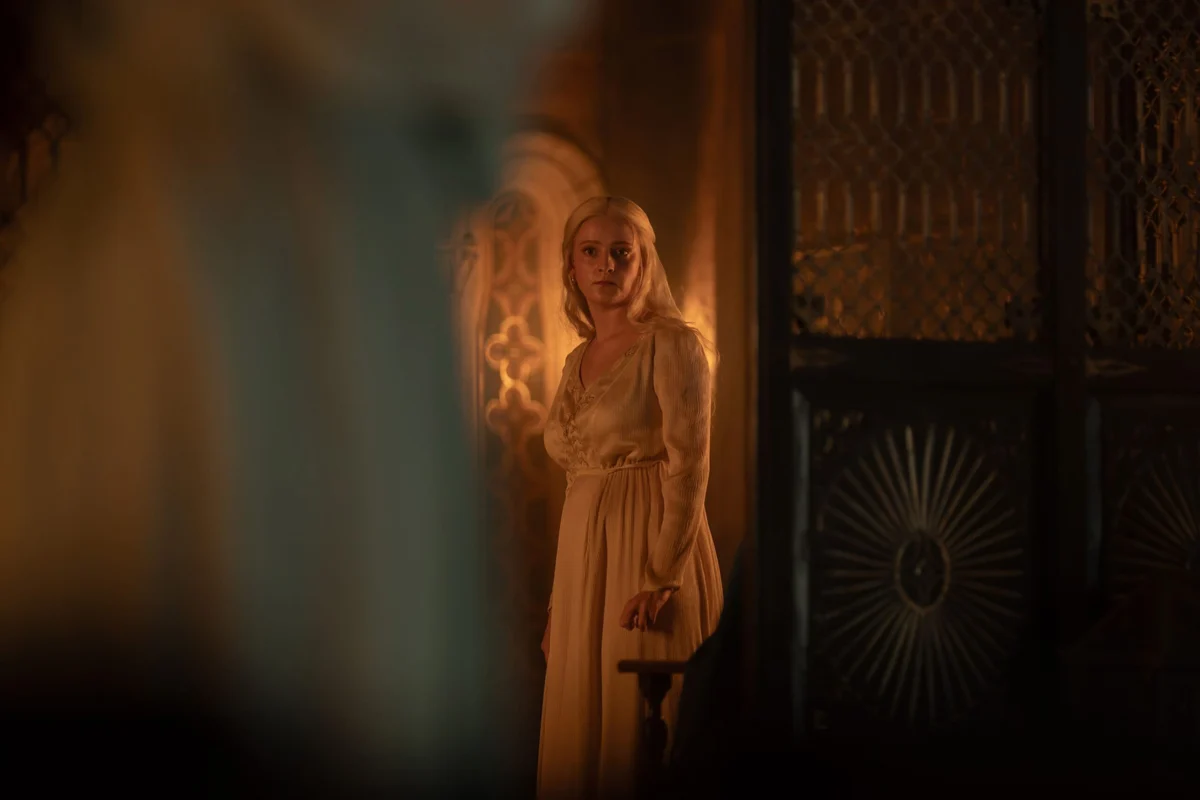
The penultimate episode of the third season of House of the Dragon has introduced a series of narrative pivots that fundamentally alter the trajectory of the Dance of the Dragons, signaling a period of extreme vulnerability for Queen Rhaenyra Targaryen’s claim to the Iron Throne. As the conflict between the Black and Green factions intensifies, the narrative has moved beyond simple battlefield tactics into the realms of psychological warfare, ancient prophecy, and the volatile nature of dragon-rider bonds. This episode, titled for its focus on the fragility of power, serves as a catalyst for the upcoming season finale, weaving together the disparate threads of the Harrenhal haunting, the emergence of new dragon riders, and the resurgence of Aegon II.
The Prophetic Burden: Helaena Targaryen and the Dreamer’s Curse
The episode opens by centering on Helaena Targaryen, a character whose role has diverged significantly from George R.R. Martin’s source text, Fire & Blood. In the literary canon, Helaena is portrayed as a tragic figure who, while beloved by the smallfolk, does not possess the supernatural foresight attributed to "Dragon Dreamers." However, the television adaptation has leaned heavily into the mystical heritage of House Targaryen, positioning Helaena as a successor to Daenys the Dreamer.
In this installment, Helaena’s visions are characterized not merely as glimpses of the future, but as manifestations of her internal psychological state—a blend of profound fear and a subconscious desire for liberation from the suffocating expectations of the court. When Rhaenyra Targaryen attempts to weaponize this foresight to validate her own "destined" reign, she is met with Helaena’s silence. This interaction underscores a critical theme: the rejection of prophecy as a political tool. Helaena’s refusal to provide answers suggests a lack of trust in Rhaenyra’s leadership and highlights the Queen’s growing desperation. For Rhaenyra, the need for divine or prophetic validation stems from the crumbling stability of her military alliances, making Helaena’s ambiguity a significant political blow.
The Taming of Sheepstealer: Rhaena Targaryen’s Ascent and the Shadow of Jacaerys
A primary focus of the episode’s middle act is the resolution of Rhaena Targaryen’s arc in the Vale. Following threats from Jeyne Arryn to return her to Dragonstone, Rhaena flees the safety of the Arryn estate in a high-stakes gamble to claim a wild dragon. Her discovery of Sheepstealer—a massive, mud-colored dragon known for its viciousness and independence—marks a turning point for the Black faction’s aerial strength.
However, the triumph is marred by the revelation of past tragedies. The narrative establishes that Rhaena’s actions, specifically her unauthorized flight and the subsequent chaos, were inadvertently linked to the death of Jacaerys Velaryon. When Rhaenyra and Addam of Hull (riding Seasmoke) intercept Rhaena and the uncooperative Sheepstealer, the tension reaches a breaking point. The Queen’s initial impulse toward retribution is tempered by the volatility of the dragons themselves. The skirmish between Syrax and Sheepstealer serves as a visceral reminder that these creatures are not mere weapons, but sentient, unpredictable forces of nature.
Rhaenyra’s decision to spare Rhaena reflects a complex calculation of maternal instinct and political pragmatism. By acknowledging that Jacaerys’s death was an accident of war and recognizing Daemon’s role in encouraging Rhaena’s independence, Rhaenyra attempts to preserve what remains of her fractured family. This mercy, however, comes at the cost of her trust in Daemon, further isolating her within her own council.
The Psychological Siege of Harrenhal: Aemond’s Descent and Alicent’s Betrayal
The narrative shift to Harrenhal continues to explore the "curse" of the stronghold, which has historically been the ruin of every house that held it. Aemond Targaryen, acting as Prince Regent, finds himself trapped in a liminal space between reality and hallucination. This atmospheric degradation is attributed to the influence of Alys Rivers, the "Barn Witch," whose mastery over the arcane has begun to unravel Aemond’s iron will.
The arrival of Alicent Hightower at Harrenhal brings the familial conflict to a head. Alicent, perceiving her son as a lost cause and a threat to the realm’s stability, takes the drastic step of attempting to assassinate him. Using belladonna, a potent sedative and poison, she seeks to end Aemond’s erratic reign. While the episode leaves Aemond’s fate in a state of suspense, the reaction of Alys Rivers suggests that the Prince Regent’s journey is far from over. From a strategic standpoint, Aemond’s incapacitation leaves the Green faction’s primary military asset—the dragon Vhagar—without a functioning commander, creating a power vacuum that Lord Larys Strong is quick to exploit.
The Return of the Golden Dragon: Aegon II and Sunfyre’s Survival
Perhaps the most significant revelation for the broader war effort is the survival of King Aegon II and his dragon, Sunfyre. Following the catastrophic Battle at Rook’s Rest in the previous season, both king and beast were presumed to be effectively neutralized. The episode follows Aegon, Tyland Lannister, and Larys Strong as they navigate the dangerous territory near Maidenpool.
In a departure from the perceived death of the dragon, the narrative aligns with the historical accounts in Fire & Blood, where Ser Criston Cole left a contingent of men to guard and feed the wounded Sunfyre. The dragon’s sudden emergence to protect Aegon from a Mooton scouting party loyal to Rhaenyra is a pivotal moment of "dragon-bonding." It reaffirms Aegon’s legitimacy in the eyes of his supporters and provides the Greens with a renewed symbol of resilience. Sunfyre’s return to the skies, even in a diminished capacity, represents a psychological victory that could galvanize the wavering lords of the Reach and the Riverlands.
The White Worm’s Influence and the Fall of the Sea Snake
As the episode draws to a close, the internal politics of Dragonstone become increasingly murky. Rhaenyra’s reliance on Mysaria, the "White Worm," has evolved from a professional alliance into a deeply personal dependency. Mysaria’s ability to manipulate the Queen’s ego—affirming her divine right to rule while simultaneously managing a web of spies—indicates a shift in Rhaenyra’s governance style. She is moving away from the traditional counsel of lords and toward a more populist, yet manipulative, shadow cabinet.
Simultaneously, the Black faction suffers its most devastating strategic loss: the capture of Corlys Velaryon. Ormund Hightower’s successful gambit to seize the "Sea Snake" effectively cripples Rhaenyra’s naval dominance. The brutality of Ormund’s message—the delivery of Corlys’s severed finger to his son Alyn—signals a transition into a more total and merciless form of warfare.
The betrayal is compounded by the defection of Ulf the White. As one of the "Dragonseeds" recently granted a dragon (Silverwing), Ulf’s resentment toward his Targaryen superiors makes him an easy target for Hightower manipulation. Ormund’s promise of lordship in exchange for betrayal highlights the inherent flaw in Rhaenyra’s plan to arm commoners with dragons: loyalty cannot be bought with fire alone when the promise of gold and status is more immediate.
Chronology of Key Events: Episode 7
- The Dreamer’s Warning: Helaena Targaryen experiences visions of liberation and fear; Rhaenyra unsuccessfully attempts to extract prophetic guidance.
- The Wild Dragon: Rhaena Targaryen successfully bonds with Sheepstealer in the Vale but is confronted by Rhaenyra over the accidental death of Jacaerys.
- The Harrenhal Crisis: Aemond Targaryen succumbs to hallucinations; Alicent Hightower attempts to poison him with belladonna; Alys Rivers intervenes.
- The King’s Resurgence: Aegon II refuses to surrender to Mooton forces; Sunfyre reveals himself to be alive, incinerating the attackers and securing Aegon’s escape.
- The Hightower Gambit: Ormund Hightower captures Corlys Velaryon and successfully recruits the Dragonseed Ulf the White through promises of nobility.
Broader Impact and Strategic Implications
The events of this episode suggest a massive shift in momentum. At the start of the season, Rhaenyra held the advantage in dragon numbers and naval power. By the end of this chapter, her naval commander is a prisoner, her most powerful dragon riders are dead or of questionable loyalty, and her rival king has returned from the brink of death.
The thematic focus on the "uncontrollability" of dragons—seen in the behavior of Sheepstealer and the bond between Aegon and Sunfyre—serves as a critique of the Targaryen belief in their own exceptionalism. As the season finale approaches, the "Dance" has become less about who sits on the throne and more about who can survive the fire they have unleashed. The capture of the Gullet and the potential betrayal of the Dragonseeds set the stage for a concluding conflict that promises to be the most destructive in Westerosi history. Rhaenyra’s descent into the influence of Mysaria suggests that the "Queen of the People" may soon find herself ruling over a city of ashes, as the lines between hero and villain continue to blur in the smoke of dragonfire.

0 Comments