
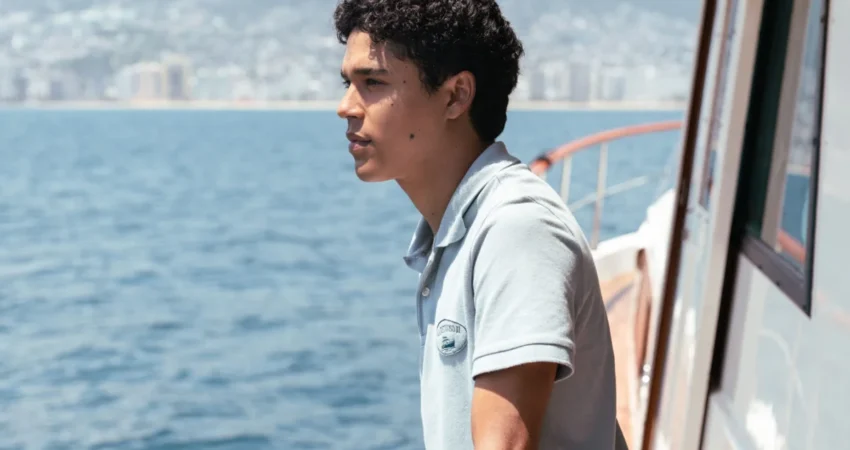
The release of the film Contra el huracán on Netflix has reignited a profound national conversation regarding one of the most catastrophic natural disasters in Mexican history. Directed by Jorge Michel Grau, the production delves into the harrowing events of October 25, 2023, when Hurricane Otis made landfall on the coast of Acapulco, Guerrero. While the film utilizes the medium of cinema to dramatize the event through the characters of Wirpul and Candi, the narrative is firmly rooted in the lived experiences of Marlon Valdez and Jonathan “Chino,” two young mariners who found themselves at the epicenter of a Category 5 storm while at sea. Their story of survival serves as a testament to human resilience amidst a tragedy that claimed dozens of lives and caused irreparable damage to the infrastructure of one of Mexico’s most iconic port cities.
The Meteorological Uniqueness of Hurricane Otis
To understand the gravity of the events depicted in Contra el huracán, one must first examine the unprecedented nature of Hurricane Otis. Meteorologists classified the storm as a "black swan" event due to its rapid intensification. On the morning of October 24, 2023, Otis was categorized as a mere tropical storm. However, within a span of less than 24 hours, it underwent an explosive intensification process, fueled by record-high sea surface temperatures in the Pacific. By the time it approached the Guerrero coastline, it had escalated to a Category 5 hurricane—the highest level on the Saffir-Simpson scale.
When Otis made landfall in the early hours of October 25, it carried sustained winds of over 260 kilometers per hour (approximately 160 mph). This rapid escalation left local authorities, businesses, and residents with very little time to implement comprehensive evacuation or reinforcement protocols. The suddenness of the shift from a manageable storm to a historic disaster is a central theme in the film, highlighting the vulnerability of coastal populations to increasingly volatile climatic patterns.
A Chronology of the Disaster
The timeline of Hurricane Otis is marked by a series of rapid developments that outpaced the response capabilities of both the government and the private sector:

- October 22–23, 2023: Tropical Depression Eighteen-E forms in the Eastern Pacific, eventually strengthening into Tropical Storm Otis. Early forecasts predicted a moderate impact.
- October 24, 2023 (Morning): Otis begins a period of rapid intensification. Forecasters realize the storm will reach hurricane strength before landfall.
- October 24, 2023 (Evening): The storm reaches Category 5 status. The National Hurricane Center describes the situation as a "nightmare scenario."
- October 25, 2023 (00:25 CST): Hurricane Otis makes landfall near Acapulco. Communications, power grids, and road access are immediately severed.
- October 25–27, 2023: The scale of the destruction becomes clear as the first responders reach the city. Reports of missing persons and destroyed vessels begin to emerge from the maritime community.
The Real-Life Survival of Marlon Valdez and Jonathan “Chino”
The narrative core of Contra el huracán is inspired by a 2023 report by journalist Beatriz Guillén for El País, which detailed the survival of Marlon Valdez and Jonathan “Chino.” At the time, Marlon was a 24-year-old sailor tasked with the maintenance and security of private vessels used for tourism and events.
On the night of the storm, Marlon and Jonathan were aboard a 42-foot yacht. Despite the worsening conditions, they remained on the vessel—a practice common in the private maritime sector where employees are often expected to "guard" high-value assets during inclement weather. As the eye of the hurricane approached, the yacht began to take on water and eventually foundered. Marlon reported that he had alerted the boat’s owner to the danger, but was instructed to stay and attempt to secure the vessel by cutting lines to nearby boats to prevent collisions.
When the yacht eventually sank, the two men were forced into the turbulent, debris-filled waters of the Pacific. During the struggle, Jonathan sustained a significant injury when a piece of floating timber pierced his arm. In an extraordinary turn of events, they managed to locate a drifting, unoccupied boat and climbed aboard. They remained huddled in this secondary vessel, enduring the peak of the hurricane’s fury until the storm subsided. Their eventual return to the shore revealed a coastline transformed into a wasteland of twisted metal and shattered concrete.
Labor Rights and the Ethics of the Private Maritime Sector
One of the most critical discussions prompted by the film involves the socioeconomic dynamics between vessel owners and their employees. Contra el huracán portrays the character Wirpul negotiating for an indemnity after the disaster, reflecting the real-world lack of institutional protection for maritime workers. In the aftermath of Otis, it was revealed that many sailors were pressured to stay with their boats to protect the investments of wealthy owners, often without adequate safety equipment or emergency protocols.
The film serves as a social critique of this "property over life" mentality. While Marlon and Jonathan survived, hundreds of other sailors and "prestadores de servicios" (service providers) were not as fortunate. The maritime community in Acapulco suffered some of the highest casualty rates, as many stayed on their boats in the Club de Yates and other marinas, hoping to ride out the storm. The lack of empathy from employers and the absence of a robust regulatory framework for small-scale maritime labor are central issues that the film brings to the forefront of public discourse.

Quantifying the Destruction: Data and Statistics
The impact of Hurricane Otis on Acapulco and surrounding areas was catastrophic, with figures that illustrate a long road to recovery. According to official government reports and economic assessments:
- Human Toll: The Mexican government officially reported 68 deaths; however, independent organizations and local testimonies suggest the number of deceased and missing could be significantly higher, with some estimates reaching into the hundreds.
- Housing and Infrastructure: Approximately 274,000 homes were damaged or destroyed. The storm also impacted 600 hotels, effectively halting the city’s primary economic engine—tourism—for months.
- Maritime Loss: Over 800 vessels, ranging from small fishing pangas to multi-million dollar yachts, were destroyed or sunk.
- Economic Impact: Total material damages were valued at an estimated $16 billion USD, making it one of the costliest natural disasters in the history of Mexico.
- Essential Services: 10,000 utility poles were downed, leaving the region without electricity for weeks, and the telecommunications blackout lasted several days, hindering rescue efforts and the dissemination of information to families outside the zone.
Official Responses and Reconstruction Efforts
In the wake of the storm, the Mexican federal government deployed the National Guard and the Secretariat of National Defense (SEDENA) to manage the distribution of food, water, and basic supplies. A multi-billion peso reconstruction plan was announced, focusing on direct cash transfers to families for home repairs and tax incentives for hotel owners to expedite the reopening of the tourist zone.
However, the response was met with criticism regarding the speed of aid and the accuracy of the casualty figures. Critics argued that the maritime sector was largely left to fend for itself in the immediate aftermath, with many sailors’ families conducting their own search and recovery operations for missing loved ones. The film Contra el huracán captures this sense of isolation and the necessity of self-reliance when institutional systems fail under the weight of an unprecedented disaster.
Life After Otis: The Transition of the Survivors
The film concludes its narrative in a way that mirrors the real-life transitions of its inspirations. In a follow-up report published in 2026, it was revealed that both Marlon Valdez and Jonathan “Chino” chose to abandon the maritime profession following their near-death experience. The psychological trauma of the event prompted a total change in career and environment.
Marlon Valdez relocated to Playa del Carmen, Quintana Roo, where he transitioned into the hospitality industry, working within the safety of a land-based hotel. Jonathan moved to Mexico City, pursuing a career in technology as a software developer. Their involvement as advisors on the Netflix production ensured that the technical aspects of the storm and the emotional reality of the survivors were captured with authenticity. Both men even made brief "cameo" appearances in the film, bridging the gap between the real events of 2023 and the cinematic retelling in 2026.

Broader Implications and the Future of Coastal Safety
The story of Contra el huracán is more than a survival drama; it is a cautionary tale regarding the future of coastal urban centers in the era of climate change. The rapid intensification seen in Otis is becoming a more frequent phenomenon as ocean temperatures rise. This reality necessitates a fundamental shift in how cities like Acapulco prepare for hurricane seasons.
Key takeaways from the analysis of the Otis disaster include:
- Early Warning Systems: The need for meteorological models that can better predict rapid intensification to provide more than a few hours of lead time.
- Maritime Regulations: Implementing mandatory evacuation orders for all personnel on vessels once a certain storm threshold is reached, regardless of the vessel owner’s wishes.
- Infrastructure Resilience: Building "storm-proof" shelters and reinforcing critical utility grids to prevent the total communication and power blackouts that paralyzed Acapulco.
By documenting the story of Marlon and Jonathan, Netflix’s Contra el huracán ensures that the human cost of Hurricane Otis is not forgotten amidst the statistics of economic loss. It highlights the stories of those who exist in the "anonymity" of service work—the sailors, the cleaners, and the maintenance crews—whose lives are often placed on the front lines of natural disasters. As Acapulco continues its long journey of rebuilding, the film serves as a reminder of the night the sea rose up and changed the city forever, and the resilience of those who, against all odds, lived to tell the story.

0 Comments