
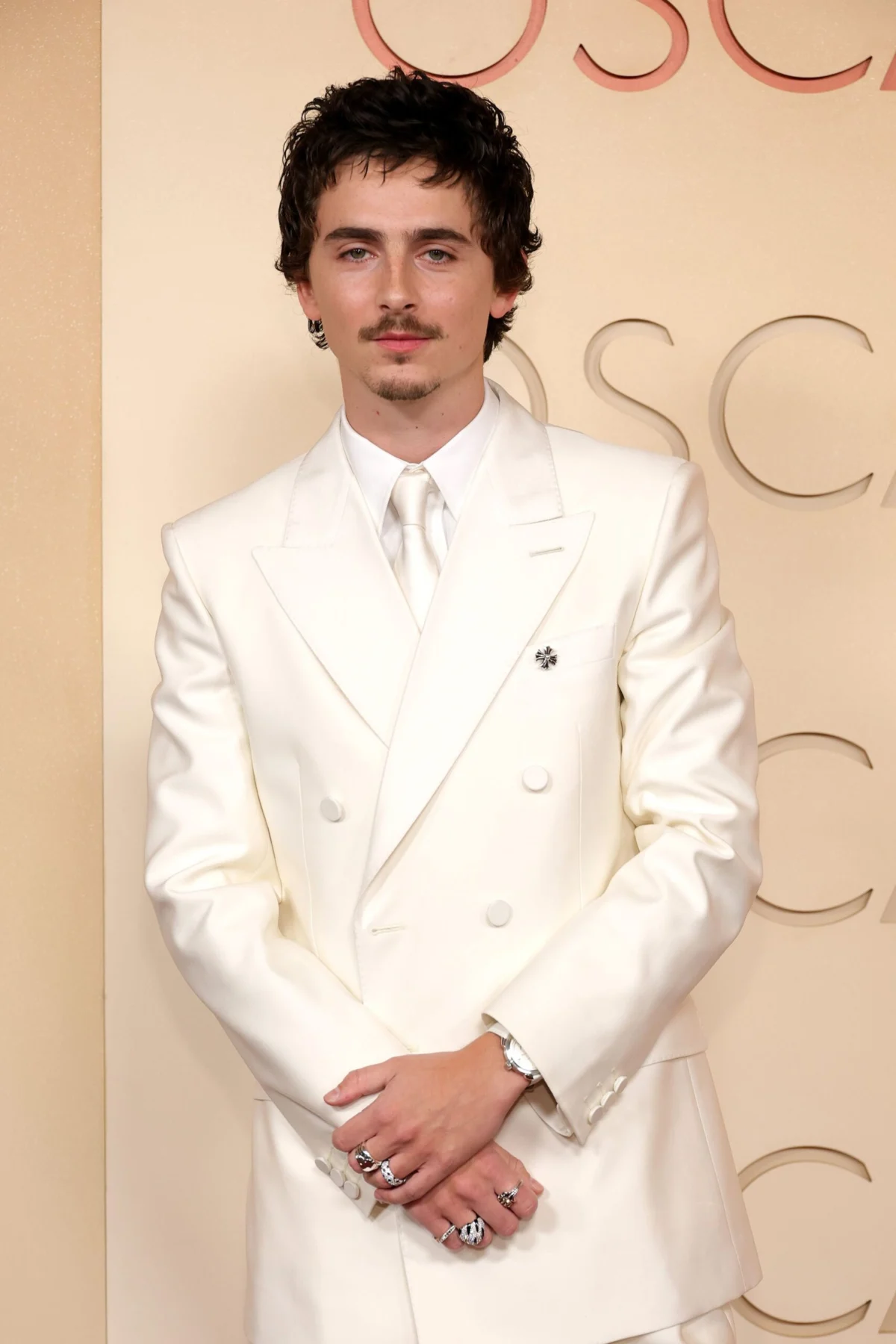
The 2026 awards season, which had previously been characterized by a predictable narrative of critical acclaim and strategic red-carpet appearances, underwent a dramatic shift in February following an interview involving Academy Award nominee Timothée Chalamet. While promoting his latest leading role in the biographical film Marty Supreme, Chalamet made a series of comments regarding the cultural relevance of ballet and opera that have since ignited a global debate. The fallout from these remarks has not only alienated segments of his core fan base but has also tangibly impacted his standing in the race for the Best Actor statuette at the upcoming 98th Academy Awards.
The Incident at the University of Texas
The controversy originated during a public speaking engagement at the University of Texas in February 2026. Chalamet was joined by veteran actor Matthew McConaughey for a moderated discussion focused on the preservation of cinema and the challenges facing the film industry in an era dominated by streaming and artificial intelligence. While the conversation was intended to champion the importance of the silver screen, it took an unexpected turn when Chalamet began contrasting film with other traditional art forms.
During the exchange, Chalamet expressed a lack of interest in participating in or supporting the "preservationist" efforts of the performing arts. "I don’t want to be working in the ballet, or in the opera, or in those things where it’s like, ‘Hey, let’s keep this alive, even though no one really cares anymore,’" Chalamet stated. Although he followed the remark with a brief addendum—"All my respect to all the people in ballet and opera"—the initial dismissal of these art forms as obsolete was quickly captured and disseminated across social media platforms.
The statement, particularly the phrase "no one really cares anymore," was perceived by many as a "red flag" regarding the actor’s burgeoning public persona. Within hours, the clip became a viral sensation on TikTok and X (formerly Twitter), triggering a wave of criticism from educators, performers, and cultural historians.

A Shift in Public Persona: From Cultured Intellectual to Hollywood Bro
The backlash against Chalamet is rooted in the stark contrast between his recent comments and the "theater kid" identity he cultivated during the early stages of his career. Since his breakout role in Luca Guadagnino’s 2017 film Call Me By Your Name, Chalamet has been viewed as a standard-bearer for a more sensitive, intellectually curious version of masculinity. His ability to speak fluent French, his public appreciation for literature, and his background at the Fiorello H. LaGuardia High School of Music & Art and Performing Arts—the "Fame" school—endeareded him to a generation of millennials and Gen Z fans who valued his apparent depth.
Throughout the early 2020s, Chalamet’s career trajectory balanced high-budget blockbusters like Dune and Wonka with avant-garde fashion choices and support for humanitarian causes. However, critics suggest that his recent transition into the "superstar machinery" of Hollywood has altered his public image. His high-profile relationship with media mogul Kylie Jenner had already prompted discussions among fans about a shift toward a more mainstream, "A-list" celebrity lifestyle.
The University of Texas comments served as a catalyst for those who argue that Chalamet has moved away from his roots in the arts. By dismissively labeling ballet and opera as "those things," he appeared to distance himself from the very institutions that provide the foundation for many actors’ training. The speed with which he was rebranded from a "cultured intellectual" to a "simple bro" in the eyes of online commentators highlights the volatility of celebrity branding in 2026.
Statistical Impact on the 98th Academy Awards
The immediate consequence of the controversy has been a sharp decline in Chalamet’s perceived chances of winning the Oscar for Best Actor. Prior to the University of Texas interview, Chalamet was considered the runaway favorite for his portrayal of table tennis champion Marty Reisman in Marty Supreme. His performance had been lauded for its physicality and emotional range, and he held a commanding lead in both critical polls and betting markets.
According to data from Polymarket, a decentralized predictions platform, Chalamet’s odds of winning the Best Actor award stood at a dominant 86% in early February. Following the viral spread of his remarks, his probability plummeted to 43% within ten days. This represents one of the most significant shifts in an Oscar race in recent memory, drawing comparisons to the "How to Lose an Oscar in 10 Days" narrative often discussed by industry strategists.

Industry analysts note that the Academy Award campaign process functions much like a political election. Voters in the Actors Branch and the wider Academy often favor candidates who demonstrate a profound respect for the history and diversity of the arts. By alienating the performing arts community—many members of which are also Academy voters—Chalamet has inadvertently created an opening for other nominees, such as those in late-surging independent dramas or veteran actors with a long-standing commitment to the stage.
Institutional Reactions and the Defense of High Art
The response from the global arts community was swift and characterized by a mixture of disappointment and strategic advocacy. Leading figures in the classical music and dance worlds utilized the moment to highlight the continued vitality and economic importance of their respective sectors.
Alondra de la Parra, the renowned Mexican conductor and director of the Foundation Orchestra and Choir of the Community of Madrid, was among the most prominent voices to address the situation. Rather than engaging in a direct attack on the actor, de la Parra used her platform to demonstrate that the performing arts are "more alive than ever." She shared data regarding record-breaking attendance at various European opera houses and emphasized the human, non-algorithmic nature of live performance—a direct counter-narrative to the "automated" entertainment world Chalamet’s comments seemed to favor.
Several major institutions, including the Metropolitan Opera and the American Ballet Theatre, reportedly saw a surge in social media engagement as they posted "behind-the-scenes" content featuring young, diverse artists. These organizations aimed to debunk the notion that "no one cares" by showcasing the rigorous training and the vibrant, youthful audiences that continue to support live theater and dance.
Chronology of the Controversy
- February 5, 2026: Timothée Chalamet and Matthew McConaughey appear at the University of Texas for a moderated talk on "The Future of Cinema."
- February 6, 2026 (10:00 AM): A 45-second clip of Chalamet’s remarks on ballet and opera is uploaded to TikTok.
- February 6, 2026 (6:00 PM): The clip reaches 5 million views across platforms. The hashtag #TheaterKidChalamet begins trending as fans express disappointment.
- February 8, 2026: Polymarket reports Chalamet’s Oscar odds drop from 86% to 71%.
- February 10, 2026: Alondra de la Parra and other cultural leaders issue public statements defending the performing arts.
- February 12, 2026: Major film critics and awards columnists begin speculating on whether the controversy will lead to a "write-in" surge for other nominees.
- February 15, 2026: Chalamet’s Oscar odds hit a low of 43%.
Broader Implications for the Cultural Landscape
Beyond the immediate concerns of the Academy Awards, Chalamet’s comments have reopened a broader debate about the value of the "human" arts in a world increasingly defined by digital consumption. The year 2026 has been a turning point for the industry, as the rise of sophisticated AI-generated content and the dominance of algorithmic streaming services have forced a reckoning regarding the role of live, physical performance.

The irony of Chalamet’s position was not lost on cultural critics. As an actor who gained fame through a film (Call Me By Your Name) that relied heavily on atmosphere, music, and the kind of nuanced physical storytelling found in dance, his dismissal of the performing arts was seen by some as a rejection of his own artistic lineage. Furthermore, Marty Supreme, the very film he is currently promoting, is a stylized, period-accurate biopic that celebrates a niche sport—a project that, much like the opera or ballet, requires a specific kind of "preservation" to reach an audience.
The controversy highlights a growing tension between "celebrity as a brand" and "celebrity as an artist." In the age of social media, where a single unscripted sentence can undo months of expensive PR campaigning, the expectation for stars to remain "on-brand" is higher than ever. For Chalamet, the challenge moving forward will be to reconcile his status as a global fashion icon and blockbuster lead with the "cultured" persona that originally built his career.
Whether Chalamet secures the Oscar in the Dolby Theatre remains to be seen. However, the events of February 2026 have ensured that the conversation surrounding his candidacy is no longer just about his performance on screen, but about his perceived respect for the wider cultural ecosystem. In a landscape where the "human" element of art is under threat from automation, the Academy may ultimately choose to reward a figure who champions the survival of all art forms, rather than one who dismisses them as relics of the past.

0 Comments