
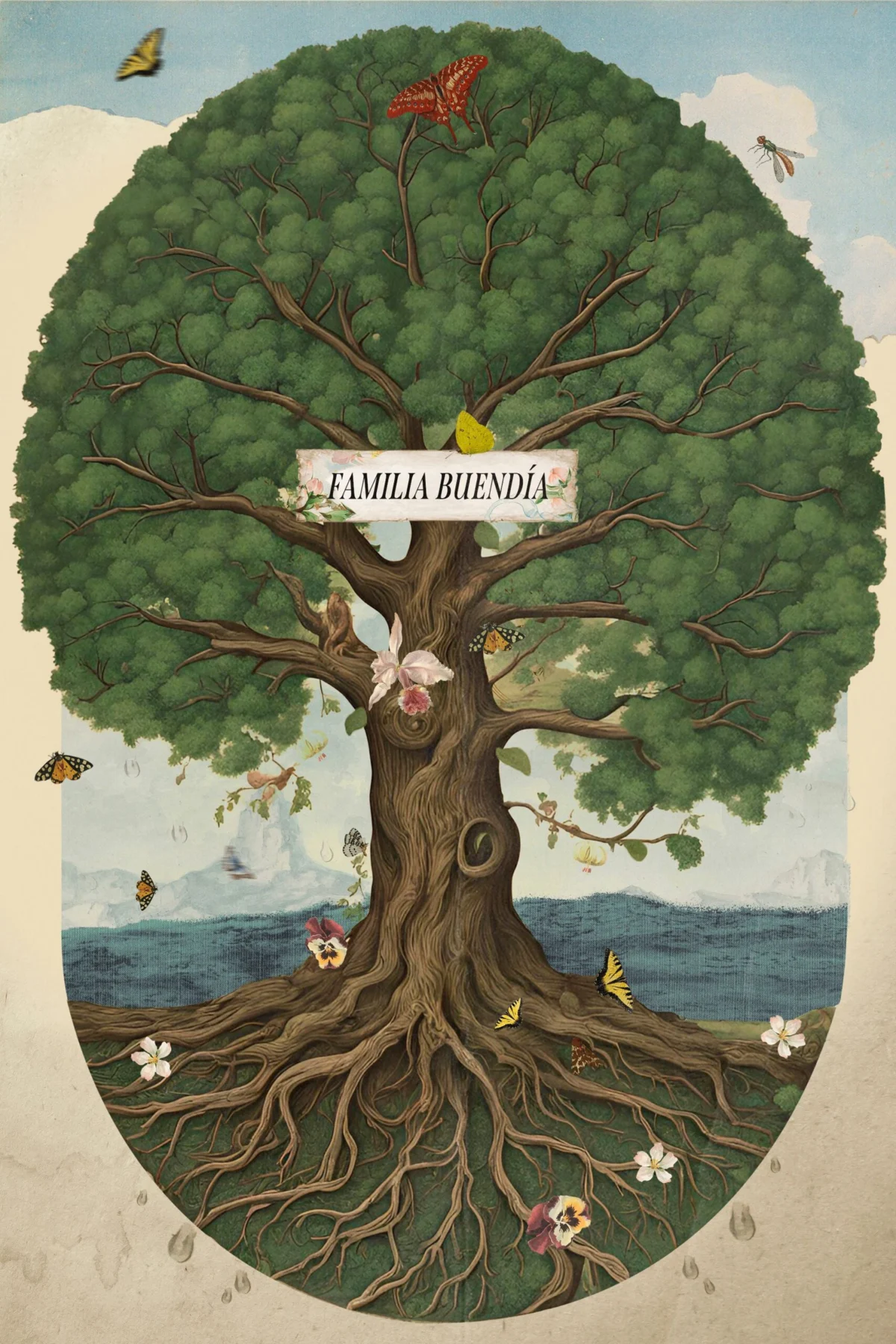
Gabriel García Márquez’s seminal masterpiece, One Hundred Years of Solitude (Cien años de soledad), is widely regarded as one of the most influential works in the history of the Spanish language and a cornerstone of the literary movement known as Magical Realism. Since its publication in 1967, the novel has sold over 50 million copies and has been translated into more than 46 languages, serving as a cultural ambassador for Latin American literature. The narrative, which chronicles seven generations of the Buendía family in the fictional town of Macondo, is celebrated for its intricate weaving of the mundane with the miraculous. However, for many readers, the novel presents a formidable challenge: the cyclical nature of time and the repetitive naming conventions of its protagonists. As Netflix prepares to launch a high-budget series adaptation, understanding the genealogy of the Buendía family is essential for navigating the complex historical and mystical landscape García Márquez created.
The Architectural Foundation of Macondo and the First Generation
The saga begins with José Arcadio Buendía and Úrsula Iguarán, a couple driven by both ambition and a haunting fear of genetic retribution. As cousins, their union is overshadowed by the legend of an ancestor who was born with a pig’s tail, a physical manifestation of incestuous guilt. Following the accidental killing of Prudencio Aguilar, whose ghost haunts José Arcadio Buendía, the couple leads a group of settlers across the mountains to found Macondo.
José Arcadio Buendía is the archetypal visionary and patriarch. His character represents the insatiable human quest for knowledge, transitioning from a leader of a thriving community to a man obsessed with alchemy and the scientific wonders brought by the wandering gypsy Melquíades. Eventually, his descent into madness leads him to be tied to a chestnut tree, where he remains until his death, communicating with ghosts.
Úrsula Iguarán serves as the family’s moral and practical anchor. Living to be over 100 years old, she witnesses the rise and fall of nearly every generation. Her character is a study in resilience; she manages the family business and maintains the household long after the men have abandoned their responsibilities for war or obsession. She is the first to recognize the tragic patterns of the family, noting that the repetition of names brings a repetition of fate.
The Second Generation: War, Solitude, and Adoption
The second generation expands the family’s reach into the socio-political turmoil of Colombia’s history. José Arcadio, the eldest son, inherits his father’s massive physique and impulsive nature. After disappearing for years with a gypsy troupe, he returns as a tattooed giant and eventually marries Rebeca, the family’s adopted daughter. Rebeca herself is a symbol of the "insomnia plague" that once afflicted Macondo, bringing with her a trunk of her parents’ bones and a habit of eating earth when distressed.
Colonel Aureliano Buendía, the second son, is perhaps the novel’s most iconic figure. Born with the ability to see the future, he becomes a legendary revolutionary leader who fights 32 civil wars and loses them all. Despite his fame, his life is defined by a profound "solitude" and an inability to truly love. He survives multiple assassination attempts and a self-inflicted gunshot wound, only to spend his final years in his workshop making little gold fishes, which he then melts down to start again—a metaphor for the futility of his endeavors.
Amaranta Buendía, the youngest daughter, represents the family’s internal bitterness. Her life is marked by a lifelong rivalry with Rebeca over the love of an Italian pianist, Pietro Crespi. Amaranta eventually retreats into a life of self-imposed celibacy and solitude, weaving her own funeral shroud as a way to control the timing of her death.
The Third Generation: The Proliferation of the Aurelianos
The third generation introduces the consequences of the family’s external ventures. Arcadio, the son of José Arcadio and the mistress Pilar Ternera, is perhaps the most despised character. Given authority over Macondo by his uncle, the Colonel, he becomes a cruel dictator before being executed by a firing squad. He marries Santa Sofía de la Piedad, a silent, hardworking woman who continues the family line without ever being fully integrated into the family’s social circle.
Aureliano José, the son of the Colonel and Pilar Ternera, represents the tragic intersection of war and forbidden desire. He becomes obsessed with his aunt, Amaranta, but his pursuit is cut short when he is killed by soldiers during the civil wars. This generation also sees the arrival of the 17 Aurelianos—sons of the Colonel by 17 different women. They arrive in Macondo with crosses of ash on their foreheads that cannot be washed off, and all but one are eventually systematically assassinated by the government, highlighting the political danger inherent in the Buendía name.
The Fourth Generation: The Zenith and the Banana Massacre
As Macondo enters the 20th century, the fourth generation experiences the town’s modernization and subsequent decay. Remedios the Beauty, the daughter of Arcadio and Santa Sofía, is a character of pure magical realism. Possessing a beauty so intense it proves fatal to the men who pursue her, she remains mentally childlike and eventually ascends to heaven, body and soul, while folding sheets.

The twins, José Arcadio Segundo and Aureliano Segundo, provide a narrative mirror to the first generation. José Arcadio Segundo becomes a witness to the "Banana Massacre," a historical event where the military opened fire on striking plantation workers. His struggle to preserve the memory of the 3,000 dead, whom the government claims never existed, mirrors the real-world "Matanza de las bananeras" of 1928 in Colombia.
Aureliano Segundo, conversely, is a man of excess and celebration. Though married to the cold and aristocratic Fernanda del Carpio, he maintains a lifelong affair with Petra Cotes. Their passion is so fertile that it causes their livestock to reproduce at supernatural rates, bringing temporary wealth to the family.
The Fifth and Sixth Generations: The Final Decline
The decline of the Buendía dynasty accelerates with the fifth generation. Renata Remedios (Meme) is sent away to a convent after her mother, Fernanda, orchestrates the shooting of Meme’s lover, Mauricio Babilonia. Meme spends the rest of her life in a vow of silence, but not before giving birth to Aureliano Babilonia.
José Arcadio (the son of Aureliano Segundo) is sent to Rome to become a Pope, a dream of his grandmother Úrsula. However, he returns to Macondo having abandoned his studies, living in squalor until he is murdered by children who steal the gold he found hidden in the house.
Amaranta Úrsula, the youngest child of Aureliano Segundo, returns from Europe with her husband, Gastón, hoping to revitalize Macondo. Instead, she enters into a passionate, incestuous affair with her nephew, Aureliano Babilonia. They are the only couple in the family’s history to experience true, mutual love, but it is a love that seals the family’s doom.
The Seventh Generation and the Fulfillment of the Prophecy
The final Buendía is the son of Amaranta Úrsula and Aureliano Babilonia. Born during a period of terminal decay in Macondo, the child is born with a pig’s tail, fulfilling the century-old fear of Úrsula Iguarán. Amaranta Úrsula dies in childbirth, and in his grief, Aureliano Babilonia neglects the infant. The child is eventually carried away and consumed by red ants, marking the literal end of the bloodline.
As the child dies, Aureliano Babilonia finally deciphers the Sanskrit scrolls left by the gypsy Melquíades. He realizes that the scrolls contain the entire history of the family, written one hundred years in advance. As he reads the final lines, a "biblical hurricane" sweeps Macondo from the face of the earth, for "races condemned to one hundred years of solitude did not have a second opportunity on earth."
Broader Impact and the Impending Netflix Adaptation
The narrative complexity of One Hundred Years of Solitude has long made it a "white whale" for filmmakers. For decades, Gabriel García Márquez refused to sell the film rights, fearing that a single movie could not capture the scope of the novel and insisting that any adaptation must be in Spanish. However, in 2019, his sons, Rodrigo García and Gonzalo García Barcha, reached an agreement with Netflix.
The production, filmed primarily in Colombia, represents a significant cultural milestone. The estate’s decision was influenced by the rise of "prestige television," which allows for the expansive runtime necessary to cover seven generations. Industry analysts suggest that the success of the series could redefine the global market for Spanish-language content, much as the novel did for Latin American literature in the 1960s.
Beyond its entertainment value, the novel remains a vital text for understanding the "circularity of history." García Márquez used the Buendía family to critique the repetitive cycles of violence, forgotten history, and social isolation that have characterized much of Latin American post-colonial history. By structuring the family tree through repeating names and fates, he argued that unless a society learns from its past, it is doomed to repeat its tragedies—a message that continues to resonate in contemporary political discourse. As the world revisits Macondo through a new medium, the Buendía family tree serves as more than just a plot device; it is a map of the human condition, etched in the solitude of a century.

0 Comments