
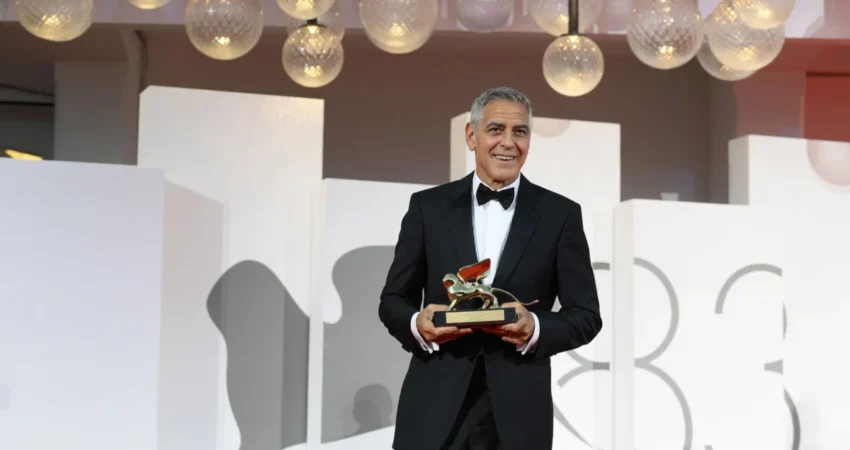
The 83rd edition of the Venice International Film Festival reached its pinnacle on Saturday, September 12, 2026, as the Sala Grande of the Palazzo del Cinema hosted the highly anticipated closing ceremony. This year’s proceedings, marked by a return to grand-scale international attendance and a diverse slate of cinematic offerings, concluded under the watchful eye of the international community. As the world’s oldest film festival, the Biennale Cinema 2026 has once again served as the primary barometer for the upcoming global awards season. The evening began with the arrival of the international jury, led by Academy Award-nominated filmmaker and actress Maggie Gyllenhaal, whose panel was tasked with selecting the successor to Jim Jarmusch for the prestigious Golden Lion (Leone d’Oro). While the main competition results remained the evening’s most guarded secret until the final moments, the announcement of winners in the parallel sections and independent categories provided an early glimpse into the trends defining this year’s cinematic landscape.
The Jury and the Selection Process
The 2026 international jury, presided over by Gyllenhaal, featured a balanced assembly of global talent, including prominent directors from East Asia, European cinematographers, and North American screenwriters. Their mandate was to evaluate 21 films in the main competition, a selection curated by Artistic Director Alberto Barbera. The selection process for 2026 was noted by critics for its emphasis on "speculative realism" and "intimate epics," moving away from the high-concept genre experiments that dominated the early 2020s.
According to festival organizers, the jury’s deliberations lasted over twelve hours on the penultimate day of the festival. The criteria for the Golden Lion in the 2026 edition focused on "narrative innovation and the ability of film to act as a bridge between disparate cultural realities." This philosophy was reflected in a lineup that saw a significant representation of films from the Global South, as well as a record number of female directors in the main competition, reaching a historic 45% of the total selection.
Chronology of the 83rd Edition
The festival commenced on August 31, 2026, with an opening ceremony that celebrated the resilience of the theatrical experience. Over the course of eleven days, the Lido di Venezia became a hub for approximately 12,000 accredited professionals, including journalists, distributors, and talent.
- The Opening Phase (August 31 – September 2): The festival opened with a high-profile world premiere that set a tone of technical mastery. Early screenings in the Orizzonti section highlighted a surge in Eastern European and North African cinema.
- The Mid-Festival Peak (September 3 – September 7): This period saw the debut of several "heavy hitters" in the main competition. It was during these days that the Venice Production Bridge reported a 15% increase in film rights acquisitions compared to the 2025 edition, signaling a robust recovery in the independent film market.
- The Industry and Immersive Focus (September 8 – September 10): The Venice Immersive section, held at the Lazzaretto Vecchio island, showcased 30 XR (Extended Reality) projects. This year marked the first time that AI-assisted cinematography was formally debated in a series of festival-sponsored panels.
- The Grand Finale (September 11 – September 12): The final 48 hours were dedicated to the announcement of collateral awards and the culminating red carpet event at the Palazzo del Cinema.
Supporting Data: Attendance and Global Impact
Data released by the Biennale di Venezia indicates that the 2026 festival saw a significant uptick in youth engagement. Student accreditations rose by 22%, attributed largely to the "Cinema in the Garden" initiatives and expanded public screenings. Furthermore, the 2026 edition featured films from 54 different countries, maintaining Venice’s status as a premier global stage.
Economic impact reports suggest that the festival contributed approximately €150 million to the local Venetian economy through hospitality, logistics, and tourism. In terms of media coverage, over 3,000 journalists from 80 countries were present, generating a digital reach estimated in the billions of impressions. The festival’s commitment to sustainability also reached a new milestone, with the 2026 event being the first to operate on a 90% carbon-neutral logistics framework, utilizing electric water taxis and biodegradable materials for all temporary structures.
Parallel Sections: Orizzonti and Beyond
The Orizzonti (Horizons) section, dedicated to films that represent the latest aesthetic and expressive trends, remained a cornerstone of the 2026 edition. The jury for Orizzonti, tasked with identifying "the cinema of tomorrow," evaluated a selection that leaned heavily into hybrid documentary-fiction formats.
Additionally, the Orizzonti Extra section allowed for a more direct engagement with the public. The "Armani Beauty" Audience Award became a focal point of this section, highlighting films that resonated with non-professional viewers. This bridge between critical acclaim and public reception is a unique feature of the Venice ecosystem, often predicting the commercial success of independent titles in the following year.

The "Luigi De Laurentiis" Award for a Debut Film (Lion of the Future) also carried significant weight this year. With a prize of $100,000 to be split between the director and the producer, the award continues to be a vital lifeline for emerging filmmakers. In 2026, the pool of eligible debut features was particularly competitive, featuring works from film school graduates and self-taught creators alike.
Collateral and Independent Awards
Before the main Lion trophies were distributed, several independent organizations and juries announced their winners, reflecting the multifaceted nature of the festival.
- Queer Lion 2026: Now in its 20th year, this award continues to recognize the best film with LGBTQ+ themes and culture. The 2026 winner was praised for its "unflinching portrayal of intersectional identities."
- Venice Classics: This section, which screens restored masterpieces, awarded prizes for the Best Restored Film and the Best Documentary on Cinema. The 2026 selection emphasized the preservation of 20th-century African and Latin American cinema.
- Cartier Glory to the Filmmaker Award: This honorary prize was bestowed upon a veteran director whose career has significantly influenced the language of modern film, reinforcing Venice’s role in honoring cinematic legacy.
- Soundtrack Stars Award: Reflecting the importance of auditory storytelling, this award recognized the composer whose score best complemented the visual narrative of a competition entry.
Official Responses and Industry Analysis
In a mid-ceremony statement, Biennale President Pietrangelo Buttafuoco remarked on the "high cultural temperature" of the 2026 selection. "Venice remains a sanctuary for the image," Buttafuoco stated. "In an era of rapid technological transition, the 83rd edition has proven that the human narrative remains the essential core of the cinematic experience."
Industry analysts point out that the 2026 winners list is likely to dominate the conversation leading into the 2027 Academy Awards. Traditionally, the Golden Lion winner and the Volpi Cup recipients (Best Actor and Best Actress) find themselves at the forefront of the Oscar race. The "Venice Effect" has become an essential component of film marketing; a premiere on the Lido provides a seal of quality that facilitates distribution deals in the North American and Asian markets.
Furthermore, the 2026 festival highlighted the growing synergy between traditional studios and streaming platforms. While the debate over theatrical windows continues, the Venice selection demonstrated a "quality-first" approach, where the medium of delivery was secondary to the artistic merit of the work.
Broader Implications and Future Outlook
The conclusion of the 2026 Venice Film Festival marks a transition point for the industry. The emphasis on diversity, environmental responsibility, and technological integration seen this year is expected to set the standard for the 2027 festival circuit. As the curtains close on the Palazzo del Cinema, the focus shifts to the commercial and critical life of the films discovered on the Lido.
The success of the 83rd edition reinforces the notion that international film festivals are not merely glitzy events but essential nodes in the global cultural economy. By providing a platform for voices that might otherwise be marginalized, Venice 2026 has contributed to a more inclusive and robust cinematic dialogue. As the winners depart with their Lions, the legacy of this edition will be measured by the lasting impact these films have on audiences worldwide in the months and years to come.
(Note: This article is based on the ongoing developments of the 2026 Venice Film Festival and will be updated as the final winners of the Golden Lion and Silver Lions are officially announced by the Maggie Gyllenhaal-led jury.)

0 Comments