
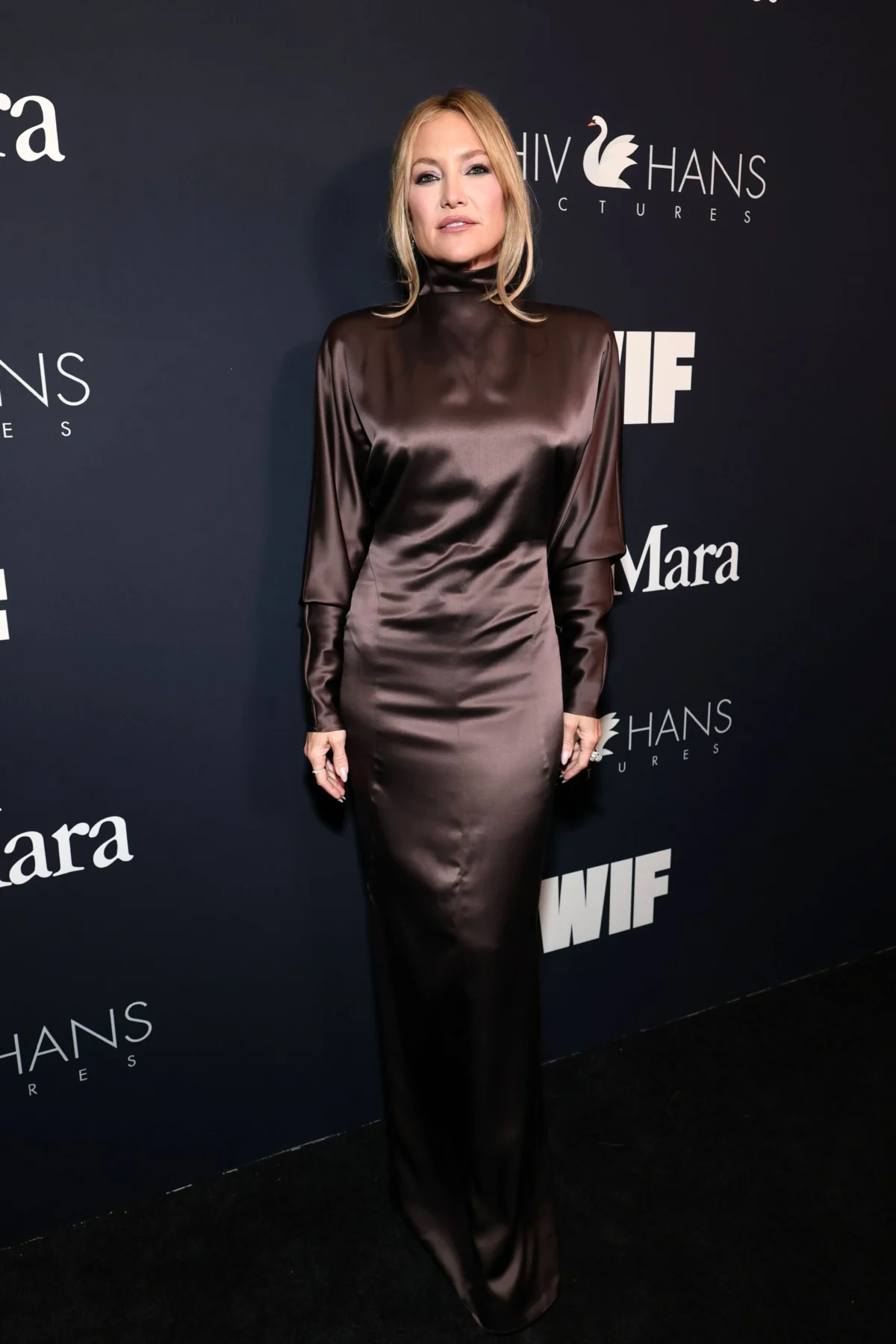
The landscape of the American film industry underwent a symbolic and celebratory transformation on Friday evening as Hollywood’s most influential figures gathered for the 19th annual Women In Film (WIF) Oscar Nominees Celebration. Hosted at the historic Wheelhouse residence in West Hollywood, the event served as a high-profile precursor to the 2026 Academy Awards, focusing exclusively on the achievements of women both in front of and behind the lens. Presented by the Italian fashion house Max Mara—a long-standing advocate for female empowerment in the arts—the evening functioned as both a festive cocktail reception and a pointed advocacy platform for gender parity in an industry historically dominated by male narratives and leadership.
The choice of venue provided a layer of cinematic history to the proceedings; the Wheelhouse was once a frequent haunt for the legendary Bette Davis, a pioneer for female agency in the Golden Age of Hollywood. As guests arrived at 6:30 p.m., the atmosphere was one of camaraderie rather than competition. The guest list spanned the full spectrum of the industry, including A-list actresses, visionary directors, influential producers, and the technical artisans—costume designers, editors, and cinematographers—whose work often forms the backbone of the year’s most acclaimed cinematic offerings.

A Legacy of Advocacy and the Road to Parity
Women In Film, founded in 1973, has spent over five decades advocating for the professional development and equitable representation of women in the screen industries. The annual Oscar Nominees Celebration is a cornerstone of this mission, designed to ensure that female achievement is recognized during the high-stakes "awards season" window. This year’s event arrived at a critical juncture for the industry. While the Academy of Motion Picture Arts and Sciences has made significant strides in diversifying its membership since the 2016 "Oscars So White" and subsequent "Me Too" movements, statistical data suggests that the "glass ceiling" remains a persistent obstacle in technical and directorial categories.
According to industry tracking data, women’s representation in non-acting Oscar categories has fluctuated between 20% and 30% over the last five years. The WIF celebration serves to counter this by providing a dedicated space where these contributions are the primary focus. Kirsten Schaffer, the Chief Executive Officer of WIF, addressed the crowd with a speech that balanced celebration with a sobering reminder of the work still required. "Many of us have spent our lives fighting for a seat at a table that was never built with us in mind," Schaffer stated. "Tonight, we celebrate. Not because the work is done, but because we refuse to stop."
Chronology of the Evening and Key Highlights
The evening’s festivities commenced with a vibrant red carpet and an outdoor reception where attendees mingled over a curated menu. Signature cocktails, aptly named "The Leading Lady" and the "Best Picture Spritz," were served as guests like Lisa Rinna and Harry Hamlin joined the early arrivals. The program shifted toward the poolside area as dusk fell, illuminated by fairy lights, setting a more intimate tone for the official recognition of the nominees.

Syrinthia Studer, President of the WIF Board of Directors, formally opened the ceremony by dedicating the night to the storytellers. "We celebrate the women who showed up, who told stories that needed to be told, who stood in front of the camera and owned it, and those who stood behind it and shaped entire worlds," Studer remarked. The core of the event followed: a roll call of the year’s female Oscar nominees. Each woman took the stage to announce her name and the category for which she is nominated, a tradition that emphasizes individual identity and professional merit.
Among the most notable moments was the appearance of Kate Hudson, a Best Actress nominee for her performance in the film Song Sung Blue. Dressed in a floor-length Max Mara gown, Hudson’s presence underscored the intersection of high fashion and high-stakes performance that defines the modern Oscar season. Following Hudson, legendary songwriter Diane Warren took the stage, nominated for Best Original Song for "Dear Me." Warren, a perennial figure at the Academy Awards with over 15 nominations to her name, used her moment to highlight the quality of the films represented, specifically praising Hudson’s work in Song Sung Blue.
The collective power of female collaboration was perhaps best exemplified by the team behind the film Hamnet. Seven women from the production, including producer Liza Marshall, stood together on stage. Marshall described the project as "deeply woman-centered," highlighting the importance of collaborative female leadership in bringing complex, historical narratives to the screen.

Supporting Data: The State of Women in Film in 2026
The 19th annual celebration occurs against a backdrop of evolving industry metrics. While the 2026 Oscar nominations showed strong representation for women in the acting and costume design categories, the "Big Five" categories—Best Picture, Best Director, Best Actor, Best Actress, and Best Screenplay—continue to show a gender gap.
Recent studies by the Annenberg Inclusion Initiative indicate that while the number of female directors on top-grossing films has seen incremental increases, the transition from box-office success to Academy recognition remains a hurdle. Events like the WIF celebration are designed to bridge this gap by increasing the visibility of female-led projects among Academy voters. The "class of 2026" featured over 30 female nominees across various categories, ranging from sound editing to lead performance, all of whom participated in a group photograph that has become a traditional symbol of the event’s impact.
Industry Reactions and Artistic Reflections
Throughout the night, attendees expressed a sense of relief and rejuvenation in having a space dedicated to their specific professional challenges and triumphs. Alicia Silverstone, whose film Bugonia earned several nominations, spoke to the importance of creative synergy. "I love [director] Yorgos Lanthimos and [lead actress] Emma Stone," Silverstone noted, while also expressing her admiration for other nominated works such as Sentimental Value and Hamnet.

Supriya Ganesh, recognized for her role as Dr. Samira Mohan in The Pitt, highlighted the communal aspect of the evening. "I am so happy to be surrounded by such an amazing creative community," Ganesh said, reflecting on the intensity of the awards season. She noted that films like Sinners, Sentimental Value, and One Battle After Another had deeply impacted her, illustrating the diversity of genres where women are currently excelling.
The younger generation of Hollywood was also well-represented. Dove Cameron, star of 56 Days, spoke of the "edifying" nature of the event. "I love women, and I love film," Cameron said. "It’s beautiful to celebrate all the women who are kicking butt." Her sentiments were echoed by Maura Higgins, the breakout star of The Traitors, who shared a lighthearted moment with her co-star Lisa Rinna, illustrating the cross-generational mentorship that WIF seeks to foster.
Broader Impact and Industry Implications
The WIF Oscar Nominees Celebration is more than a social gathering; it is a strategic instrument for industry change. By partnering with Max Mara, WIF leverages the resources of a global luxury brand to amplify its message. Max Mara’s involvement, which includes the annual "Face of the Future" award, reinforces the idea that female success in film is a valuable cultural and economic commodity.

The implications of such events are felt in the long-term career trajectories of the attendees. Visibility at a WIF event can lead to increased networking opportunities, project greenlighting, and a stronger bargaining position for female creators. Furthermore, the event serves as a public-facing reminder to the Academy and the public that the film industry’s health is directly tied to its inclusivity.
As the evening concluded and the nominees dispersed into the West Hollywood night, the consensus was clear: the 19th annual celebration was a testament to resilience. In an industry that is still grappling with the fallout of labor strikes, the rise of streaming, and shifting cultural expectations, the women of Hollywood demonstrated that they are not merely participants in the cinematic conversation—they are increasingly the ones directing it.
The 2026 Academy Awards will serve as the final tally for this year’s nominees, but the WIF celebration ensured that regardless of who takes home the golden statuette, the collective achievement of women in film has already been etched into the record of the year’s greatest cinematic accomplishments. The event closed with a sense of forward momentum, looking toward a future where "women in film" is no longer a category requiring special distinction, but an equal and integrated standard of the global entertainment landscape.

0 Comments