
 Raisa Andriana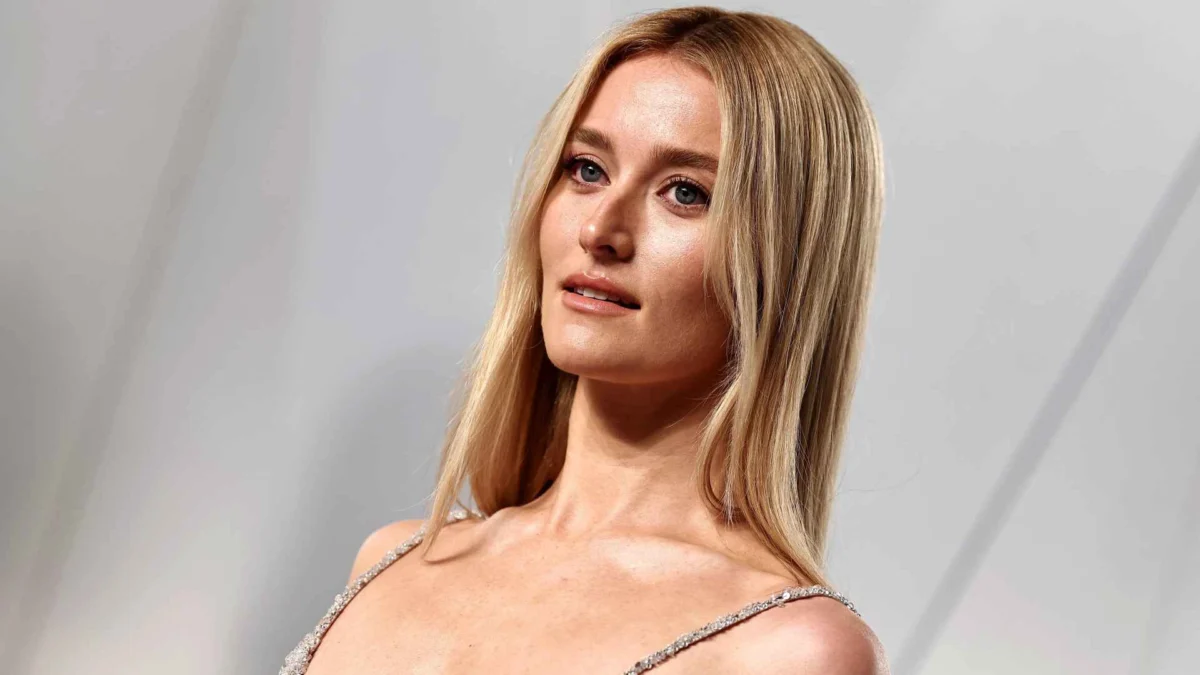
The cultural resurgence of Carolyn Bessette-Kennedy as a definitive style icon has reached a new zenith in 2026, driven largely by the premiere of the biographical series Love Story. As actress Sarah Pidgeon steps into the role of the late publicist and wife of John F. Kennedy Jr., her portrayal has ignited a global fascination not only with Bessette-Kennedy’s "old money" wardrobe but specifically with her signature hair color. This aesthetic revival has brought a specialized coloring method known as "cashmere foils" to the forefront of the professional hair industry. This technique, characterized by its soft, multidimensional finish and "butter blonde" tones, is currently dominating salon requests and redefining the standards of luxury hair care for the spring-summer season.
The phenomenon is more than a fleeting nostalgia for the 1990s; it represents a fundamental shift in consumer preferences toward "quiet luxury" and hair health. Professional stylists and industry experts report that the "cashmere foils" method provides a level of sophistication and natural luminosity that traditional highlighting techniques often lack. By focusing on ultra-fine sections and strategic placement, the technique evokes the delicate, high-quality texture of cashmere fabric, offering a "silent" blonde that prioritizes subtleness over high-contrast drama.

Technical Methodology: Understanding the Cashmere Foils Process
The "cashmere foils" technique is a precision-based coloring method that utilizes aluminum foils to achieve a controlled, bright, yet remarkably natural result. Unlike the free-hand painting associated with balayage, which often creates a sun-kissed, lived-in look with darker roots, cashmere foils allow for a more uniform distribution of light from root to tip. According to Alberto Jesús Arévalo, Academy Manager at Schwarzkopf Professional, the primary objective is to illuminate the hair without leaving visible lines or artificial-looking streaks.
The process involves isolating extremely thin strands of hair and applying lightener within foils. This allows the colorist to achieve a higher degree of lift and precision. Arévalo notes that the name "cashmere" is intentional, as the goal is to create an effect as soft and "spongy" as the luxury textile. This is achieved through a multi-step tonalization process. After the initial lightening, the hair is treated with layered glazes or toners to add depth and dimension. This ensures that the blonde is not flat or monochromatic but instead possesses the rich, creamy variations found in "butter blonde" palettes.
The technique is particularly favored for its ability to enhance "capillary health." Because the sections are so fine, the lightener can be applied more strategically, often requiring less overall chemical processing to achieve a bright effect. This aligns with the 2026 trend of "hair skinification," where the health and integrity of the hair fiber are considered just as important as the final color.

The Chronology of an Icon: From the 1990s to the 2026 Screen
To understand the current obsession with this look, one must look back at the origins of Carolyn Bessette-Kennedy’s influence. In the mid-1990s, as a publicist for Calvin Klein, Bessette-Kennedy became the face of American minimalism. While the era was often defined by the "heroin chic" aesthetic or high-glamour supermodels, her style was rooted in "effortless chic"—uncomplicated silhouettes, neutral palettes, and a hair color that looked inherently hers.
The timeline of this revival began in late 2024, coinciding with the initial production announcements for Love Story. As leaked images of Sarah Pidgeon on set began to circulate, fashion and beauty analysts noted a shift in social media engagement toward 90s minimalism. By the time the series premiered in early 2026, the "Old Money" aesthetic had transitioned from a niche TikTok subculture into a mainstream fashion movement.
The portrayal of Bessette-Kennedy by Pidgeon required a meticulous recreation of her iconic blonde. Celebrity colorist Kari Hill, who worked on the actress’s hair, utilized the cashmere foils technique to bridge the gap between a historical tribute and a modern, wearable trend. This cinematic influence has translated directly into consumer behavior, with search queries for "natural blonde techniques" and "Carolyn Bessette hair" increasing by over 140% in the first quarter of 2026.

Expert Analysis and Industry Endorsements
The professional community has been quick to validate the shift toward more refined coloring techniques. Iván Navarta, an Education Specialist for Goldwell & Kerasilk, suggests that the popularity of the butter blonde achieved through cashmere foils is due to its association with "health, naturalness, and sophistication." He argues that after years of high-maintenance platinum trends and high-contrast balayage, consumers are seeking a "middle ground" that looks expensive but requires less frequent salon visits for aggressive root corrections.
Furthermore, the technique’s versatility is a major selling point. While it is most frequently associated with the golden, creamy tones of Bessette-Kennedy, Alberto Jesús Arévalo points out that the methodology is not exclusive to blondes. "It can provide dimension and contrast to brunettes, offering soft, natural reflections that enrich the color without appearing ‘streaky,’" he explains. This versatility allows the technique to be applied to a wide range of base colors, including:
- Butter Blonde: The signature creamy, warm-toned blonde.
- Honey and Gold: For those seeking a sun-drenched, warmer glow.
- Neutral Sand: A balanced tone that suits both cool and warm skin tones.
- Dimensional Brunette: Adding "lit-from-within" brightness to darker bases.
Celebrity Case Studies and Cultural Impact
The influence of cashmere foils extends beyond the screen. A new wave of celebrities has adopted the technique, further cementing its status as the "it" color of the season. Rosie Huntington-Whiteley, known for her adherence to the "Quiet Luxury" aesthetic, has transitioned her blonde to a more seamless, cashmere-inspired finish. Jennifer Aniston, whose hair has been a cultural touchstone for decades, has also leaned into this more polished, uniform highlighting method to maintain her natural-looking radiance.

Other notable figures such as Jennifer Garner, Emma Stone, and Rachel McAdams have reportedly worked with top-tier colorists like Tracey Cunningham to achieve similar multidimensional results. These celebrities represent a demographic that values "timeless" over "trendy," a sentiment that is increasingly resonating with the broader public. The move toward cashmere foils signifies a rejection of "fast beauty"—characterized by harsh lines and rapid trend cycles—in favor of a look that feels curated and enduring.
Economic and Market Implications
The rise of specialized techniques like cashmere foils has significant implications for the professional salon industry. As consumers move away from DIY coloring kits and toward high-precision professional services, salons are seeing an increase in "premium service" bookings. The cashmere foils technique requires a higher level of skill and more time than standard highlights, allowing salons to command higher price points for the expertise involved.
Market data from the first half of 2026 indicates that the professional hair color segment is growing at a faster rate than the at-home color market for the first time in five years. This is attributed to the "un-copyable" nature of techniques like cashmere foils. The layering and strategic placement required to achieve a "cashmere" effect are nearly impossible to replicate without professional training, reinforcing the value of the hairstylist in the luxury beauty ecosystem.

Broader Implications: The Future of "Silent Luxury" in Beauty
The success of the cashmere foils technique is a symptom of a larger shift in the beauty industry. As the "Old Money" and "Quiet Luxury" trends continue to evolve, the focus is moving toward quality over quantity. In hair care, this means moving away from over-processed, "fried" hair and toward colors that enhance the natural texture and shine of the hair.
The legacy of Carolyn Bessette-Kennedy serves as the perfect blueprint for this movement. Her ability to look impeccably put-together without appearing to have tried too hard is the ultimate goal of the modern consumer. The cashmere foils technique provides a technical solution to this aesthetic desire, offering a way to achieve a high-status look through subtlety and precision.
As we look toward the remainder of 2026, it is clear that the "silent blonde" is here to stay. Whether driven by the cinematic allure of Love Story or a genuine desire for more sophisticated beauty routines, the cashmere foils method has established itself as a cornerstone of modern hairdressing. It represents a harmonious blend of 90s inspiration and 21st-century technology, proving that true style—much like the legacy of Carolyn Bessette-Kennedy—never truly goes out of fashion.

 Eva Lovia
 Julia Chirkova
 Julia Prastini
 Nila Kartika Wati
 Lina Irawan
 Jia Lissa