
 Nila Kartika Wati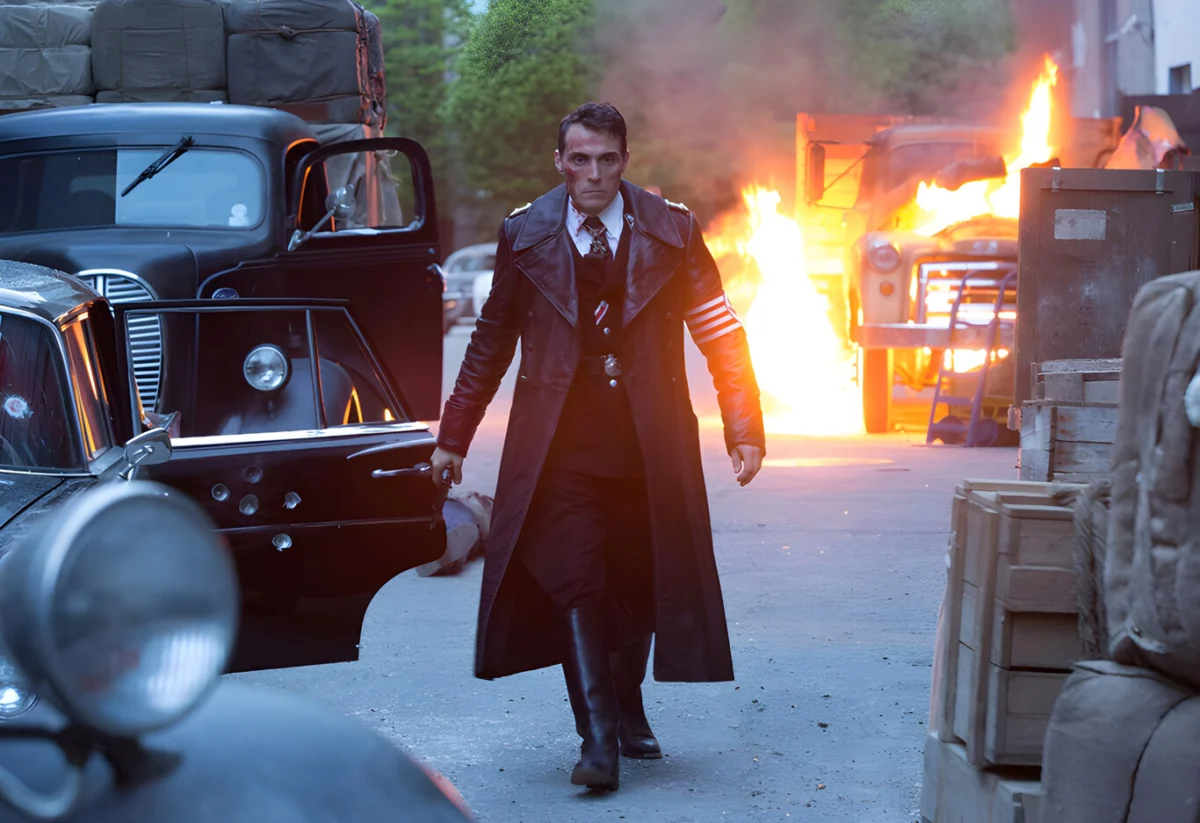
The global streaming landscape has witnessed a landmark transition as the critically acclaimed dystopian series The Man in the High Castle officially makes its debut on Netflix. For nearly a decade, the production served as a cornerstone of the Prime Video original content library, representing one of the first major forays into big-budget prestige television for Amazon Studios. Now, more than 4,000 days after its initial pilot premiered to record-breaking audiences, all four seasons of the alternate-history thriller are available to a broader global demographic. This move signifies a rare instance of a high-profile "original" series crossing platform boundaries, offering a new generation of viewers the opportunity to experience one of the most complex adaptations of Philip K. Dick’s literary works.
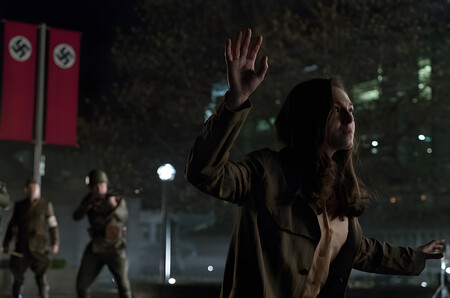
Based on the 1962 Hugo Award-winning novel by Philip K. Dick, the series presents a chillingly detailed "uchronia"—a reimagining of history in which the Allied Powers lost World War II. The narrative is set in 1962, twenty years after the surrender of the United States. The country has been partitioned into three distinct territories: the Greater Nazi Reich in the East, the Japanese Pacific States in the West, and a lawless "Neutral Zone" along the Rocky Mountains. The series follows a disparate group of characters whose lives intersect when they encounter a series of mysterious propaganda films—and later, newsreels—that appear to show a reality in which the Allies actually won the war. This central mystery serves as the catalyst for a burgeoning resistance movement and a high-stakes psychological game between global superpowers.
Historical Context and Development Chronology
The journey of The Man in the High Castle from page to screen was a protracted process that spanned several years of development hell. The project was initially conceived for the BBC before moving to Syfy, but it ultimately found a home at Amazon Studios during the infancy of its original programming strategy.

In January 2015, the pilot episode was released as part of Amazon’s "Pilot Season," a unique crowdsourced model where viewers voted on which shows should be greenlit for full seasons. The pilot became the most-watched program in the history of the platform’s original development program at that time. Following this unprecedented success, a full ten-episode first season was commissioned and released in November 2015.
The chronology of the series reflects a steady expansion of its scope. Season 2, released in December 2016, deepened the political intrigue and introduced the character of the "Man in the High Castle" himself, played by Stephen Root. After a leadership change behind the scenes and a lengthy production cycle, Season 3 premiered in October 2018, pivoting the series more firmly into the realm of hard science fiction by introducing the concept of the "Nebenwelt"—a gateway to parallel dimensions. The fourth and final season concluded the epic in November 2019, providing a definitive end to the saga of the American resistance and the collapse of the totalitarian regimes.
Narrative Depth and World-Building Excellence
The primary appeal of the series lies in its meticulous production design and atmospheric world-building. Under the executive production of Ridley Scott—whose previous work on Blade Runner remains the gold standard for Philip K. Dick adaptations—the series creates a hauntingly plausible version of a fascist-occupied America. The visual language of the show is a stark blend of 1960s Americana and brutalist Axis aesthetics. Viewers see swastikas integrated into the neon lights of Times Square and Japanese Shinto influences reshaping the culture of San Francisco.
Technically, the show achieved a level of realism that sparked academic and historical discussion. The art department was tasked with imagining how German and Japanese technology and fashion would have evolved had they dominated the mid-20th century. This included the development of "sub-orbital" jet travel and the suppression of "degenerate" American art forms like jazz and rock-and-roll. The result is a sensory experience that feels grounded and terrifyingly tangible, moving beyond simple shock value to explore the banality of evil within a functioning bureaucracy.

Cast Performances and Character Analysis
The ensemble cast is led by Alexa Davalos as Juliana Crain, a woman whose discovery of the forbidden films sets the plot in motion. However, the series is perhaps best known for its complex portrayal of its antagonists. Rufus Sewell delivers a career-defining performance as Obergruppenführer John Smith, an American veteran who defected to the Nazi regime to protect his family. His character arc serves as a profound exploration of moral compromise and the psychological toll of maintaining power within a monstrous system.
Complementing Sewell is Joel de la Fuente as Chief Inspector Takeshi Kido of the Kempeitai. Kido is portrayed not as a cartoonish villain, but as a man of intense duty and rigid traditionalism, struggling to maintain order in the Japanese Pacific States as the empire begins to overextend its reach. The interplay between these characters and the resistance fighters—including Cary-Hiroyuki Tarawa as the trade minister Nobusuke Tagomi—elevates the series from a standard thriller to a philosophical inquiry into the nature of fate and identity.
Critical Reception and Industry Accolades
Throughout its four-season run, The Man in the High Castle maintained a high level of critical acclaim. On the review aggregator Rotten Tomatoes, the series holds an overall approval rating of 84%. Critics frequently praised the show for its "stunning visuals" and "gripping performances," with Variety describing it as a "masterpiece of production design" and The Hollywood Reporter calling it "a triumph of technical execution."
The industry recognized these achievements through numerous awards. The series earned two Primetime Emmy Awards: one for Outstanding Cinematography for a Single-Camera Series and another for Outstanding Main Title Design. It received several additional nominations for its visual effects, production design, and sound editing. These accolades solidified its reputation as a "prestige" drama that helped elevate the status of streaming television to the level of premium cable networks like HBO.
Distribution Shifts and the Streaming Evolution
The arrival of The Man in the High Castle on Netflix marks a significant moment in the "Streaming Wars." Historically, major platforms like Amazon and Netflix have guarded their original IPs with extreme exclusivity. However, as the market matures and production costs rise, studios are increasingly looking toward licensing deals to recoup investments and find new audiences for completed libraries.
Industry analysts suggest that this migration could be the result of a complex co-production or distribution agreement that has reached its expiration or renewal phase. For Netflix, acquiring a ready-made library of 40 high-quality episodes provides a significant boost to its sci-fi and drama offerings without the financial risk of new production. For the creators, it ensures that the show’s legacy continues to grow as it reaches the largest streaming subscriber base in the world.
Broader Impact and Cultural Implications
The Man in the High Castle remains culturally relevant due to its exploration of political extremism and the fragility of democracy. By utilizing the "what if" scenario of an Axis victory, the series forces viewers to confront uncomfortable questions about collaboration, resistance, and the American identity. In an era where speculative fiction often mirrors real-world anxieties, the show’s depiction of a divided nation and the power of truth—represented by the forbidden films—resonates deeply.
Furthermore, the series pushed the boundaries of the "multiverse" concept long before it became a staple of mainstream superhero cinema. By grounding the idea of parallel realities in a gritty, historical context, it explored the emotional weight of knowing that a better version of the world exists elsewhere. This metaphysical layer added a unique dimension to the political thriller, making it a standout entry in the science fiction genre.

Conclusion and Viewer Outlook
With its 40-episode arc now available on Netflix, The Man in the High Castle is positioned for a major resurgence. The series offers a complete, closed-ended narrative that is ideal for binge-watching, providing a cinematic experience that rivals major theatrical releases. For fans of Philip K. Dick, the series remains the most expansive and visually faithful realization of his paranoid, reality-bending themes.
As the boundaries between streaming platforms continue to blur, the availability of such a high-caliber production on multiple services is a victory for the consumer. Whether viewed as a cautionary tale, a historical curiosity, or a masterclass in tension, the series continues to stand as a pillar of modern television. Its arrival on Netflix ensures that the "Man in the High Castle" and his mysterious films will continue to haunt and inspire audiences for years to come.


 Eva Lovia
 Julia Chirkova
 Julia Prastini
 Jia Lissa
 admin
admin