
 Raisa Andriana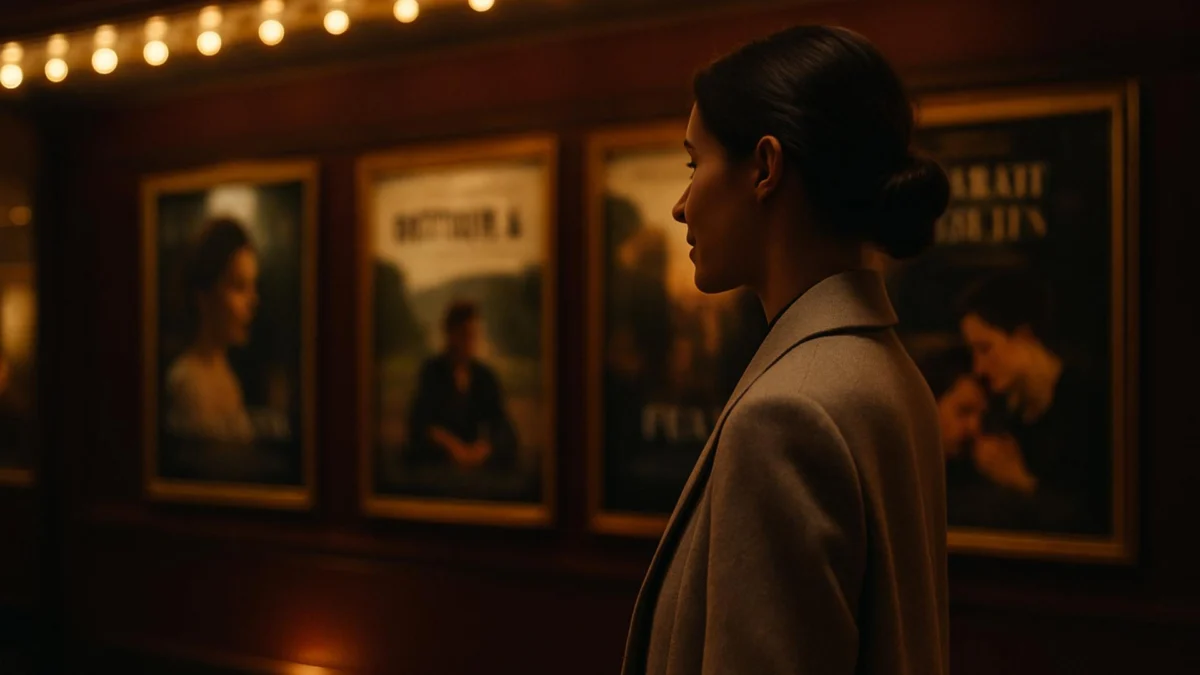
European auteur cinema, often referred to as "cinema of the author," represents a profound departure from the traditional industrial models of filmmaking, prioritizing the director’s personal vision over commercial formulas. Unlike the producer-driven studio systems common in Hollywood, the European tradition views the director as the primary creative force—the "author" of the film in the same way a novelist is the author of a book. This cultural phenomenon, which has been the subject of renewed interest through digital curation and high-profile film festivals, serves as the foundation for a sophisticated understanding of modern visual storytelling. As audiences increasingly seek out films that offer emotional resonance and intellectual depth, the distinction between mainstream entertainment and auteur-driven art has become a central pillar of global cultural discourse.
The Theoretical Foundation: La Politique des Auteurs
The concept of the "auteur" found its formal voice in post-World War II France. In the mid-1950s, critics writing for the influential magazine Cahiers du Cinéma, including future legends such as François Truffaut and Jean-Luc Godard, formulated "la politique des auteurs" (the policy of the authors). They argued that even within the constraints of the studio system, certain directors managed to infuse their work with a distinct personal style and recurring thematic preoccupations.

This movement was not merely an academic exercise; it was a revolution in how cinema was perceived. It elevated film from a populist pastime to a high art form capable of expressing complex existential, political, and social truths. This historical context is essential for understanding why European cinema today continues to emphasize the "signature" of the director. Whether it is the sterile, symmetrical world of Wes Anderson (an American heavily influenced by European sensibilities) or the visceral, provocative landscapes of Lars von Trier, the director’s hand is always visible.
Chronology of Influence: From Neorealism to the Contemporary Era
The timeline of European auteur cinema is marked by distinct movements that responded to the shifting political and social climates of the continent.
- Italian Neorealism (1940s–1950s): Following the devastation of World War II, directors like Roberto Rossellini (Rome, Open City) and Vittorio De Sica (Bicycle Thieves) took cameras into the streets. Using non-professional actors and natural lighting, they focused on the struggles of the working class, establishing the "raw" aesthetic that remains a hallmark of European independent film.
- The French New Wave (1950s–1960s): Truffaut, Godard, and Agnès Varda broke every rule of classical filmmaking. They utilized jump cuts, broke the fourth wall, and explored non-linear narratives. This era proved that cinema could be self-reflexive and experimental while still capturing the pulse of the youth culture.
- New German Cinema (1960s–1980s): Led by figures such as Werner Herzog, Rainer Werner Fassbinder, and Wim Wenders, this movement dealt with the trauma of German history and the alienation of the post-war generation. Their films were often characterized by a sense of "Sturm und Drang" (storm and stress), blending the poetic with the political.
- Dogme 95 (1995–Present): Lars von Trier and Thomas Vinterberg created a "vow of chastity" for filmmakers, banning special effects, artificial lighting, and non-diegetic music. This movement was a radical call to return to the essence of storytelling, free from the "corruption" of high-budget artifice.
- The Contemporary Greek Weird Wave and Beyond: Today, directors like Yorgos Lanthimos (The Favourite, Poor Things) and Justine Triet (Anatomy of a Fall) continue the tradition by blending surrealism with sharp social commentary, proving that European auteurism remains at the cutting edge of the industry.
Supporting Data: The Economic and Cultural Market Share
While Hollywood dominates the global box office in terms of raw revenue, European auteur cinema holds significant "soft power" and critical influence. According to data from the European Audiovisual Observatory, European films account for approximately 25% to 30% of the market share within the European Union, with domestic productions often outperforming international blockbusters in countries like France and Italy.

The financial viability of this sector is heavily supported by the Creative Europe MEDIA program, which allocated approximately €2.44 billion for the 2021–2027 period to support the diversity of European film. This subsidy model allows directors to take creative risks that would be impossible under a purely commercial framework. Furthermore, the "Big Three" film festivals—Cannes, Venice, and Berlin—act as essential market hubs. For example, the Cannes Film Festival attracts over 35,000 film professionals annually, serving as the primary launchpad for films that will eventually dominate the awards circuit and curated streaming platforms like MUBI or The Criterion Channel.
Analysis: Auteur vs. Independent Cinema
A recurring point of debate in the industry is the distinction between "auteur" and "independent" cinema. While the terms are often used interchangeably, they represent different facets of the industry. Independent cinema refers primarily to the financial structure of a film—produced outside the major studio system. Auteur cinema, however, refers to the creative philosophy.
A high-budget film can be an auteur work if the director maintains total creative control (e.g., Christopher Nolan or Pedro Almodóvar), whereas a low-budget independent film may lack a distinct directorial voice. The true "European" model often bridges this gap, utilizing state and regional funds to ensure that the director’s "signature" is not compromised by the need for a massive return on investment. This focus on "creative control" over "commercial appeal" is what defines the ritual of the European cinema-goer: the choice to see a film not for its plot alone, but for the specific way a director sees the world.

Official Responses and the Festival Ecosystem
The survival of auteur cinema is intrinsically linked to the festival ecosystem. Thierry Frémaux, the director of the Cannes Film Festival, has frequently stated that the festival’s mission is to "defend the cinema of the world" against the homogenization of global streaming content. Similarly, the European Film Academy, which hosts the European Film Awards, emphasizes that these films are vital for preserving the continent’s diverse linguistic and cultural identities.
In a 2023 statement, the European Film Academy noted: "Cinema is the most powerful tool we have for cross-border empathy. Auteur cinema allows us to see the world through the eyes of our neighbors, transcending language barriers through the universal language of the moving image." This sentiment is echoed by the rise of "filmotecas" and boutique cinemas in urban centers like Madrid, Paris, and Berlin, where cinema-going is treated as a social and intellectual ritual rather than a passive consumption of media.
Broader Impact: The Digital Renaissance
The transition to digital streaming was initially feared as the death knell for niche cinema. However, the reality has been quite the opposite. Specialized streaming services have democratized access to European classics and contemporary gems. Data indicates that audiences under 35 are increasingly engaging with "slow cinema" and foreign-language films through these platforms, seeking an alternative to the "algorithm-driven" content of larger services.

This shift has turned film knowledge into a form of cultural currency. Recognizing a reference to Michelangelo Antonioni’s framing or understanding the political subtext of a Polish drama is no longer reserved for academics; it is part of the modern lifestyle of the "curated consumer." The quiz format, as seen in publications like Marie Claire, reflects this trend—it is an invitation for the audience to test their cultural literacy and refine their tastes in an era of infinite choice.
Conclusion: The Future of the European Gaze
As we look toward the future, European auteur cinema faces challenges from Artificial Intelligence and the further consolidation of media conglomerates. Yet, the core appeal of the auteur remains: the human touch. In an age of generated content, the "signature" of a director—their flaws, their obsessions, and their unique visual language—becomes even more valuable.
The European way of looking at the world, characterized by a refusal to provide easy answers and a commitment to aesthetic beauty, ensures that this form of cinema will remain a vital part of the global cultural landscape. Whether experienced in a dimly lit theater in a European capital or through a carefully curated digital library, these films continue to do what the original Cahiers du Cinéma critics intended: they demand that we look closer, feel deeper, and acknowledge the director as a true artist. Knowing the movements, the awards, and the key figures of this world is not just about trivia; it is about participating in a century-old conversation about what it means to be human in a rapidly changing world.




 Eva Lovia
 Julia Chirkova
 Julia Prastini
 Nila Kartika Wati
 Lina Irawan
 Jia Lissa